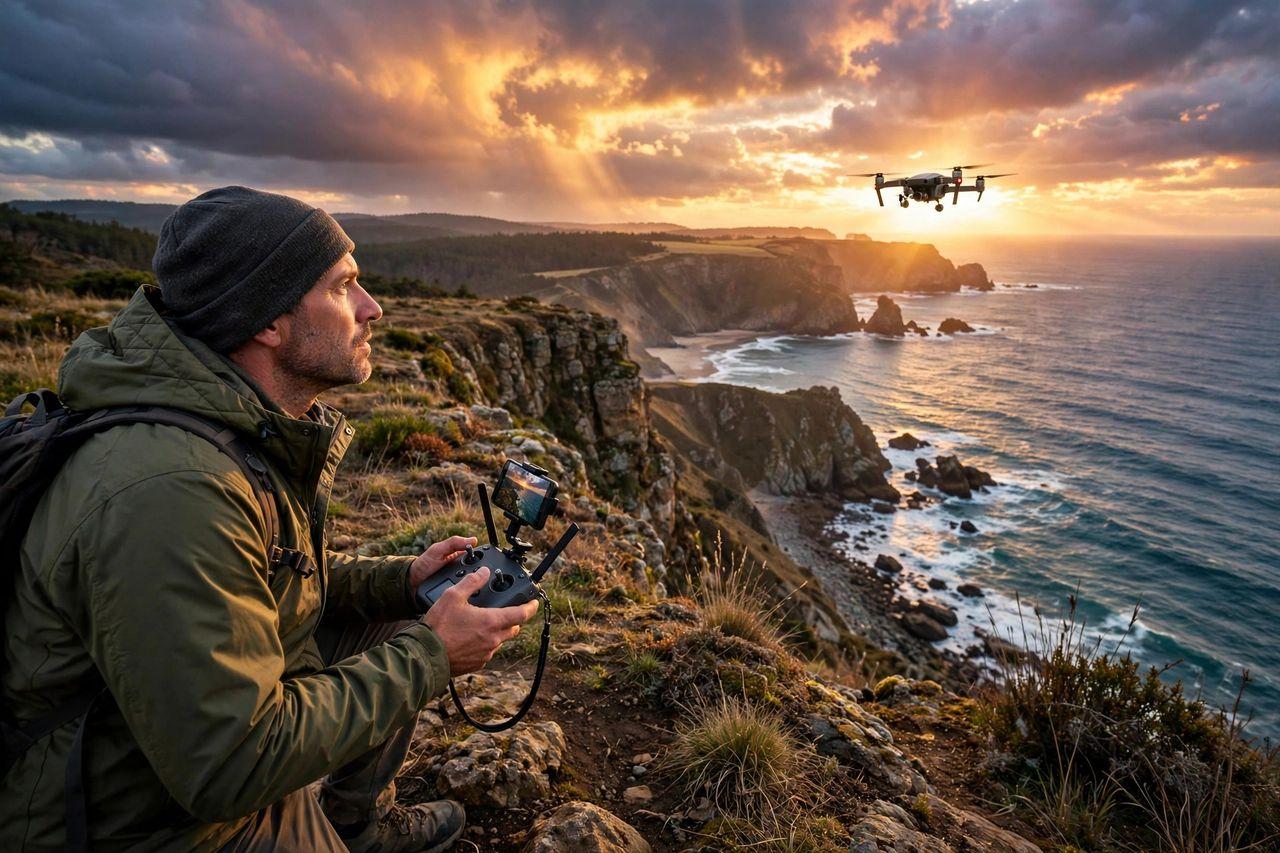
Drones put a cinema camera in your backpack — but they also come with real rules, real risks, and a learning curve. This guide covers the legal basics, the camera skills, and a first-flight checklist so your maiden voyage ends with great shots, not a crash.
Know the Rules Before You Fly
In the US, recreational drones under 250g skip FAA registration; heavier ones must be registered. Many countries require similar registration and a basic pilot certificate. Never fly near airports, over crowds, or above 400 feet (120m) — and always check local no-fly zones in an app before takeoff. Fines are real and expensive.
Your First Flight: The Safe Checklist
Start in a wide-open field with no trees, people, or water. Fly in calm weather — wind is the #1 beginner killer. Learn the controls at low altitude first: hover, gentle turns, slow forward flight. Keep the drone in sight at all times and watch the battery; land at 25%, not at 5%. Your first ten flights are practice, not portfolio.
Camera Tips That Instantly Improve Shots
Shoot in the golden hours (sunrise/sunset) — midday sun makes flat, harsh aerials. Use the rule of thirds and leading lines like roads and rivers; altitude reveals patterns invisible from the ground. Shoot RAW photos and 4K video for editing flexibility, and keep movements slow — fast drone moves look amateur. A polarizing (ND) filter set is the best $30 upgrade for video.
Beginner Mistakes to Avoid
Flying backward into trees (the camera faces forward — your blind spot is behind you). Ignoring return-to-home settings — set the RTH altitude above nearby obstacles. Trusting "obstacle avoidance" completely — thin branches defeat it. And posting footage of restricted areas online, which is basically self-reporting a violation.
Respect the rules, practice the basics, and the sky becomes your studio. Every great drone photographer started with a shaky first hover in an empty field — yours is waiting.