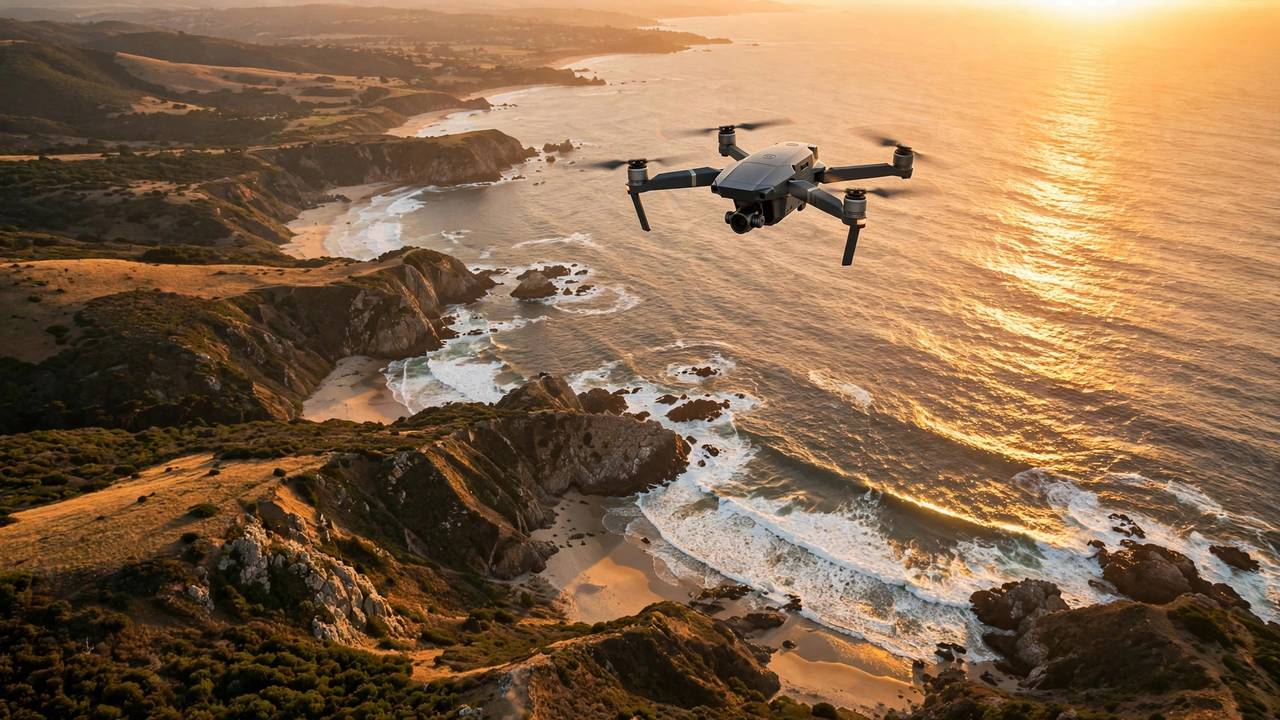
A drone turns ordinary landscapes into breathtaking aerial art — winding coastlines, misty forests, city grids glowing at dusk. In 2026, beginner-friendly drones shoot 4K video and high-resolution photos for less than a mid-range phone, and intelligent flight modes make cinematic shots almost automatic. But great drone photography is not just buying a drone: you need the right model, the legal rules, and camera skills. This beginner guide covers all three.
The Best Beginner Drones in 2026
Start with a sub-250-gram drone: in many countries these face the lightest regulations while still packing excellent cameras. Look for 3-axis gimbal stabilization — it is the difference between smooth cinema and a shaky mess. Obstacle avoidance sensors save beginners from expensive crashes, and 30+ minutes of flight time per battery means real shooting sessions. Intelligent modes like orbit, follow-me, and waypoint flights create professional moves automatically. Buy at least one spare battery and a carrying case; also budget for ND filters, the cheapest way to make video look cinematic. Skip racing drones and heavy pro models until you master the basics.
Know the Rules Before You Fly
Drone laws are strict and vary by country — ignorance is not a defense and fines are real. Most places require registration for drones above 250 grams, and many require a basic pilot certificate even for small ones. Universal no-fly common sense: stay below the legal altitude limit (often 120 meters), keep the drone in sight, never fly over crowds, and stay far from airports and emergency scenes. Check official airspace map apps before every flight — temporary restrictions appear around events and wildfires. Some countries ban drones in national parks entirely. When traveling, research local rules in advance: a few destinations confiscate drones at customs.
Camera Tips for Stunning Aerial Shots
Great drone photos follow the same rules as great ground photos, from above. Shoot during golden hour — the hour after sunrise and before sunset — when long shadows add depth. Use leading lines: roads, rivers, and coastlines pull the viewer through the frame. Try top-down shots of patterns — fields, beaches, and rooftops become abstract art from directly above. For video, move slowly and smoothly: fast moves look amateur, slow reveals look cinematic. Bracket exposures or shoot RAW for maximum editing flexibility, and always check your histogram — blown-out skies ruin otherwise perfect shots. Finally, scout on foot first: the best aerial compositions are planned before takeoff.
Drone photography rewards preparation: the right beginner drone, legal flying, and solid camera technique. Master these three and your aerial shots will stand out from the sea of generic drone footage. Charge your batteries, check the airspace map, and go create something beautiful.