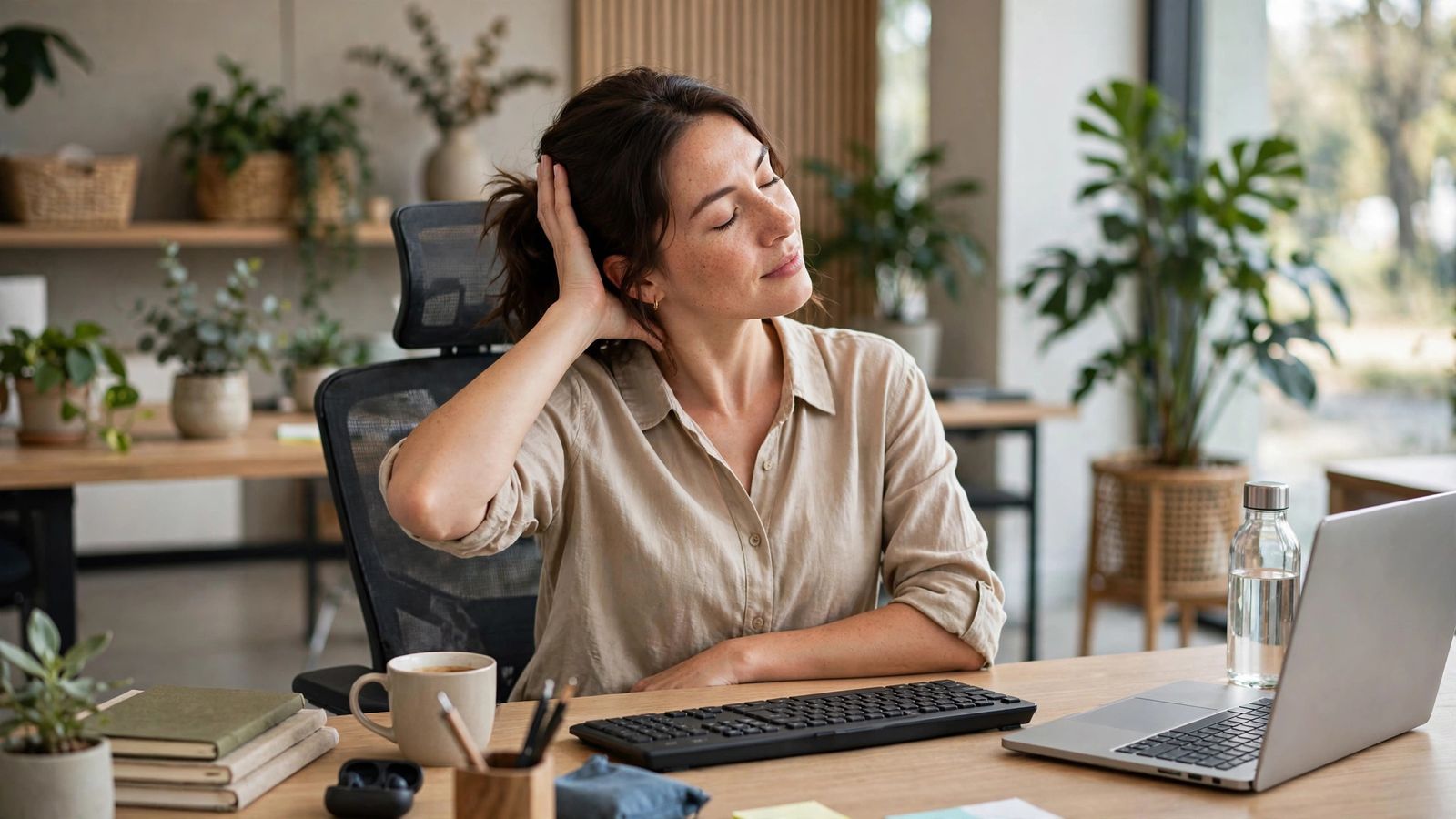
That stiff, achy neck by 3 p.m.? It's "tech neck" — hours of hunching over a screen tighten the muscles around your neck and shoulders. The good news: five minutes of targeted stretching can undo a whole morning of damage. Do these seven stretches right at your desk, no equipment needed, and breathe slowly through each one.
Chin Tucks: Fix Your Head Posture
Sit tall and pull your chin straight back, making a double chin — don't tilt your head up or down. Hold 5 seconds, release, repeat 10 times. This strengthens the deep neck muscles that hold your head upright and directly counteracts the forward-head slump that causes most desk neck pain.
Neck Tilts and Gentle Rolls
Tilt your right ear toward your right shoulder until you feel a stretch on the left side; hold 20 seconds, then switch sides. Then slowly roll your chin across your chest from shoulder to shoulder, 5 times each direction. Keep the motion slow — never crank or force your neck into a painful position.
Shoulder Shrugs and Chest Opener
Lift both shoulders to your ears, squeeze for 5 seconds, and drop them — repeat 10 times to release trapped tension. Then clasp your hands behind your back, straighten your arms, and lift slightly while opening your chest. Hold 20 seconds. Tight chest muscles pull your shoulders forward; this stretch reverses that.
Upper Trap and Levator Scapulae Stretch
For the upper trap: tilt your ear to your shoulder and gently press with your hand for a deeper stretch, 20 seconds each side. For the levator scapulae (the muscle that aches when you turn your head): turn your nose toward your armpit and gently press the back of your head down. Hold 20 seconds per side — this one targets the exact spot most desk workers feel pain.
Make It a Daily Habit
Stretching once won't fix chronic pain — consistency will. Set an hourly reminder to do chin tucks and shoulder rolls, and run the full 5-minute routine once in the morning and once in the afternoon. Also raise your monitor so the top of the screen is at eye level; the best stretch is the one your posture makes unnecessary.
Persistent pain, numbness, or tingling down your arms? See a doctor — stretches help muscle tension, but they can't diagnose nerve issues.