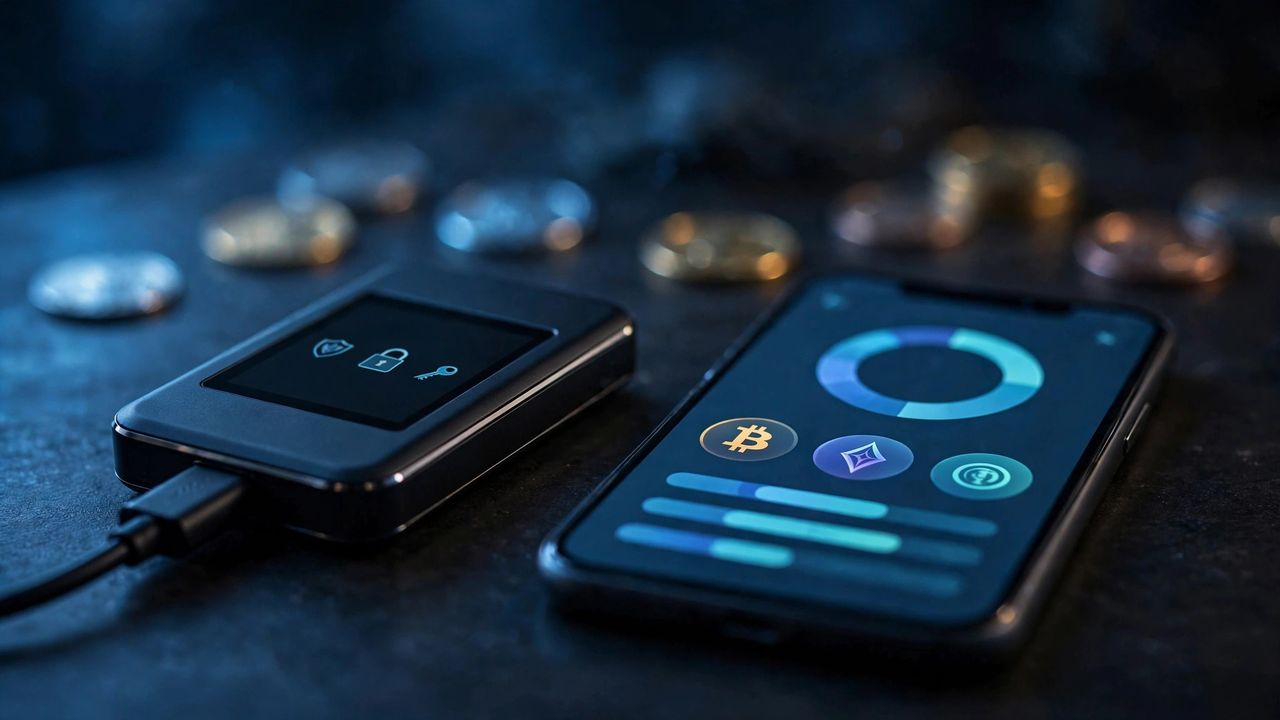
A crypto wallet doesn't hold coins — it holds the private keys that prove the coins on the blockchain are yours. Lose the keys, lose the crypto, with no bank to call. In 2026 wallets are far friendlier than the early days, but the responsibility is still entirely yours. This beginner guide covers the essentials without the jargon.
Hot Wallets vs. Cold Wallets
Hot wallets live on your phone or computer and connect to the internet — convenient for trading and daily use, but exposed to hacks and malware. Cold wallets are physical devices (or even paper) kept offline — much safer for long-term storage, slightly slower to use. The standard beginner strategy is simple: a hot wallet for small spending amounts, a hardware wallet for savings you don't touch. Never keep life-changing sums on an exchange or a phone app.
Your Seed Phrase Is Everything
When you create a wallet, it shows a 12- or 24-word seed phrase — this is the master key to your funds. Anyone with these words can take everything; no one, including the wallet company, can recover them if you lose them. Write them on paper (or stamped metal for fire protection), store copies in two separate secure places, and never photograph, screenshot, or type them into a website. Test your backup once by restoring on a second device before storing real money.
Beginner Mistakes That Cost Money
The classics never change: sending coins to the wrong network address (always send a tiny test amount first), falling for fake "support" agents in DMs (real support never asks for your seed phrase), and signing wallet permissions on shady websites that drain your funds. Bookmark your wallet and exchange sites — phishing links are the top theft method. And never buy crypto because a stranger promised guaranteed returns; that's always a scam.
Starting Safely: A Simple Plan
Begin small: install a reputable wallet from its official site, write down your seed phrase properly, and practice with a tiny amount. Learn to send, receive, and back up before adding serious money. Enable every security feature — PIN, biometrics, and transaction confirmations. Spend a week learning before you invest anything you couldn't afford to lose; in crypto, patience is a security feature.
Crypto rewards the careful and punishes the rushed. Master one wallet, guard one seed phrase, and start tiny — the technology is here to stay, but only disciplined beginners stay in the game.