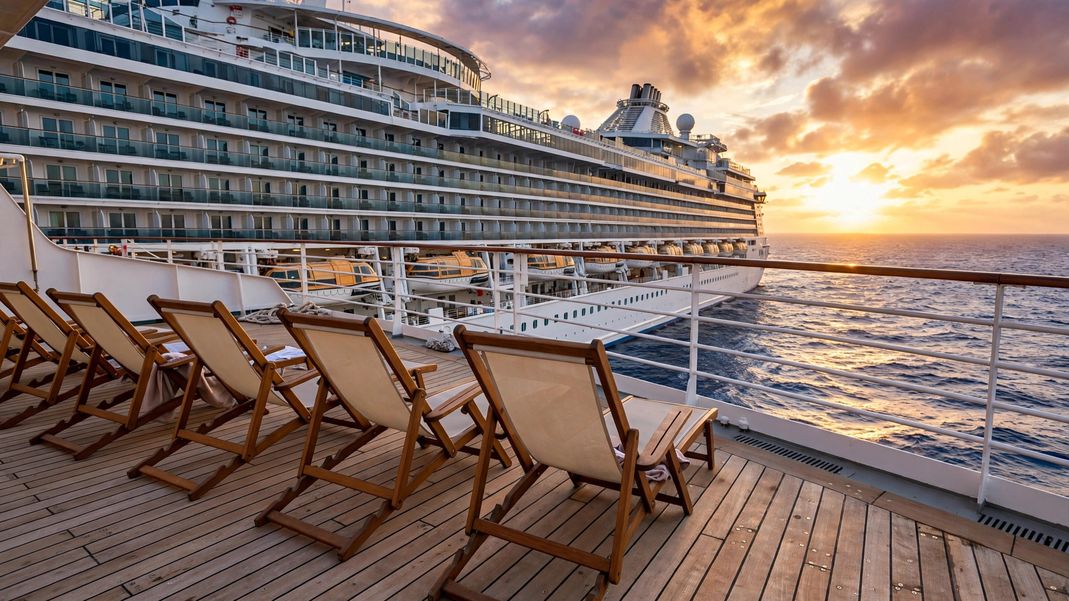
A cruise bundles travel, dining, and entertainment into one floating resort — unpack once and wake up somewhere new. For a first cruise, pick a 5–7 day sailing on a mid-size ship; mega-ships and long voyages overwhelm newcomers.
Choosing the Right Ship and Itinerary
Match the ship to your style: family ships buzz with activities, smaller ships feel relaxed and refined. Itinerary matters more than the ship — you will remember ports far longer than pools. Caribbean and Mediterranean routes are the classic first-timer picks.
Cabin Types: Inside, Oceanview, Balcony, Suite
Inside cabins are dark and cheap (great sleepers); balconies add private sea views at a premium. First-timers get the best value from an oceanview or midship balcony — location beats luxury. Cabins midship on lower decks feel the least motion.
Understanding the Real Cost
The fare covers room, main dining, and entertainment — but expect port fees, daily gratuities, drinks, Wi-Fi, and excursions on top. Budget 40–60% above the advertised fare for the true total; "all-inclusive" is not quite all-inclusive. Book 6–9 months ahead for the best prices.
What to Pack (and What to Skip)
Pack layers for breezy decks, swimwear, formal-night outfits, sunscreen, and motion-sickness remedies. Bring motion-sickness tablets even if you "never get sick" — the open ocean surprises people. Skip the hairdryer and beach towels; the ship provides both.
Embarkation Day Tips
Arrive at the port early, carry a day bag with swimwear and documents (checked luggage arrives later), and complete online check-in beforehand. Do the online check-in the moment it opens — early slots mean you board sooner and lunch sooner. Keep passports and boarding passes on your person.
Making the Most of Sea Days
Sea days are for the ship itself: pools, shows, classes, spas, and quiet deck corners. Plan one anchor activity per sea day and leave the rest open — over-scheduling kills the vacation vibe. Book popular shows and specialty dining on day one before slots fill.