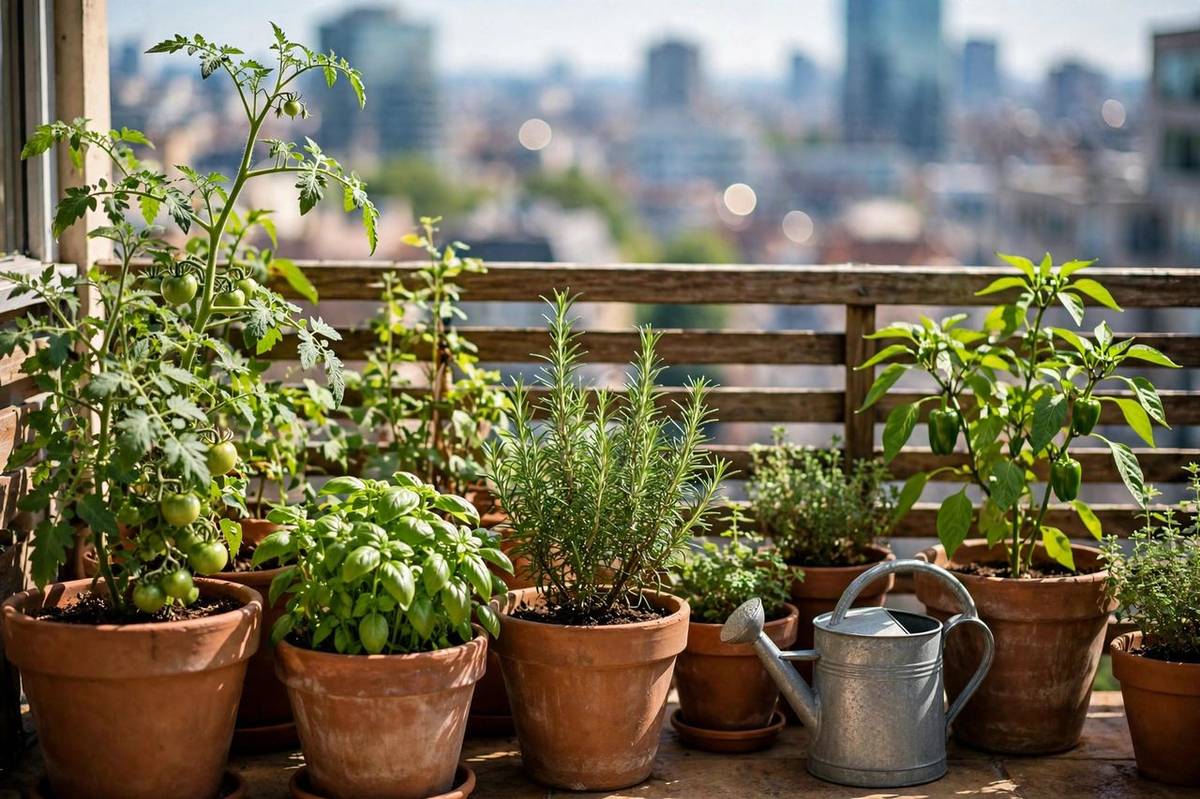
You do not need a backyard to grow your own food in 2026. A sunny balcony, a patio, or even a bright windowsill can produce fresh tomatoes, herbs, and greens all season long. Container gardening lets you control the soil, dodge most pests, and start small. Here is how to set up a thriving little garden in pots.
Pick the Right Containers
Bigger is almost always better. A five gallon pot suits one tomato plant, while herbs do fine in six to eight inch pots. Make sure every container has drainage holes, because soggy roots kill more plants than anything else. Fabric grow bags are a great beginner choice because they drain well, prevent root circling, and cost very little. Dark pots heat up fast, so use light colored ones in hot climates.
Use Quality Potting Mix
Never fill containers with garden soil, which compacts and suffocates roots in pots. Buy a bagged potting mix made for containers and refresh the top few inches each spring. Mixing in about one quarter compost gives your plants slow release nutrients without any chemical fertilizer. Water until it drains from the bottom, then wait until the top inch is dry before watering again.
Choose Easy Beginner Crops
Start with forgiving plants that reward small efforts. Cherry tomatoes, basil, mint, lettuce, scallions, and peppers all thrive in pots and harvest quickly. Leafy greens like lettuce and spinach can be cut repeatedly from the same plant for months of harvests. Most vegetables need at least six hours of direct sun, so track your light before you plant.
Feed and Water Consistently
Potted plants dry out faster than garden beds, especially in summer heat. Check moisture daily and water in the morning so leaves dry by evening. A half strength liquid fertilizer every two weeks keeps heavy feeders like tomatoes productive through the whole season. Mulch the surface with straw or shredded leaves to slow evaporation and keep soil temperatures steady.
Container gardening rewards consistency more than expertise. Check on your plants for a few minutes each day, learn what they look like when they are thirsty, and do not be discouraged by one lost seedling. Within a single season you will be harvesting food you grew yourself, which never gets old.