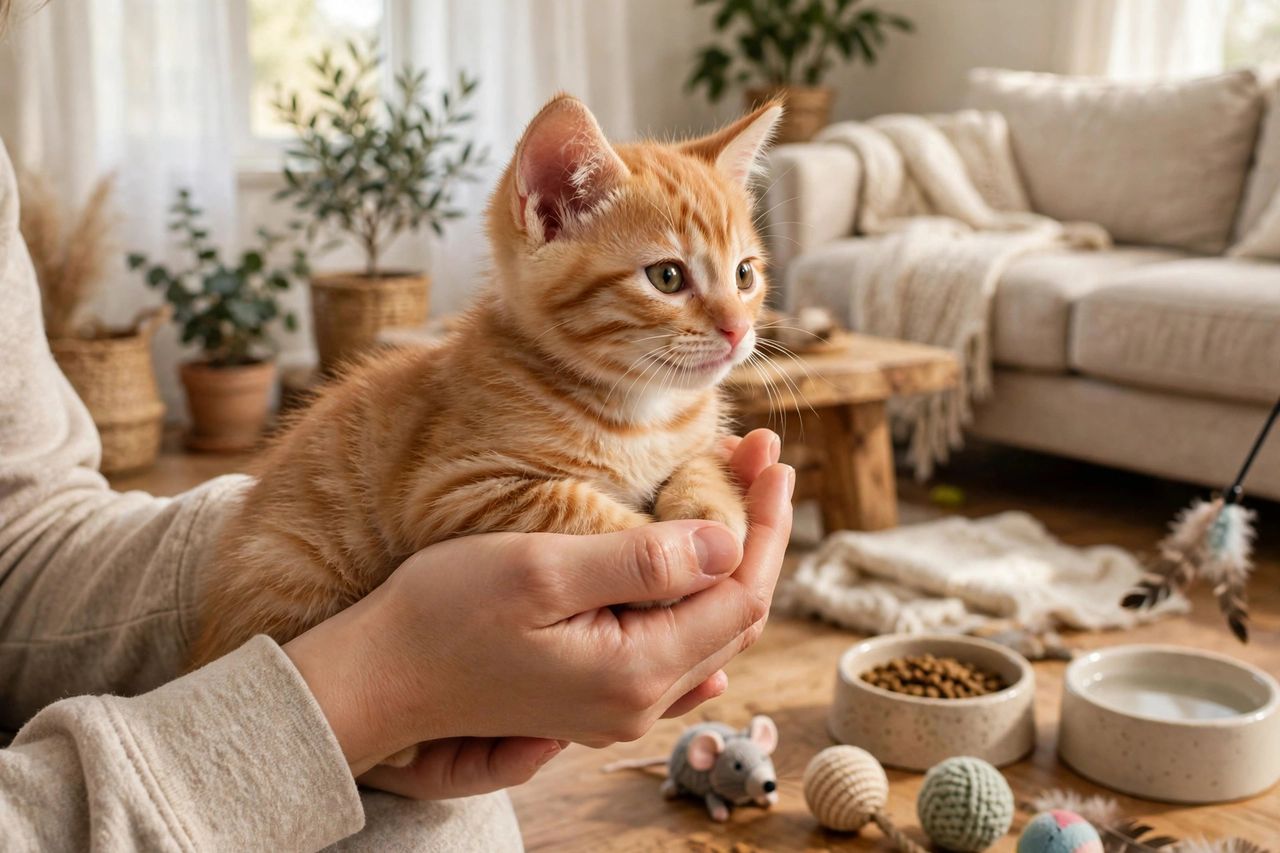
Prepare Your Home Before the Cat Arrives
Cats settle in fastest when their world is ready. You need a litter box, quality food and water bowls, a scratching post, a carrier, and a quiet hiding spot like a box or covered bed. Set up one small safe room first rather than giving a nervous new cat the whole house — they explore more confidently from a home base.
Feeding: What, When, and How Much
Kittens under one year need kitten food fed 3-4 times a day; adults do well on two meals daily. Choose food where a named meat is the first ingredient and always keep fresh water available — many cats drink more from a fountain or a glass kept away from their food. Avoid overfeeding: a healthy adult cat has a visible waist and ribs you can feel, not see.
Litter Box Basics
The rule is simple: one box per cat, plus one extra. Place them in quiet, accessible spots — never next to food and water — and scoop daily. Most cats accept unscented clumping litter best. If your cat suddenly avoids the box, check it is clean before assuming a behavior problem; sudden changes can also signal illness worth a vet visit.
Health: Vet Visits, Vaccines, and Spaying
Book a vet checkup within the first week, even if the cat looks healthy. Kittens need a vaccine series; adult rescues may need boosters. Spaying or neutering prevents health problems and unwanted litters — most vets recommend it around 5-6 months. Keep up monthly parasite prevention and schedule annual checkups to catch problems early.
Play, Scratching, and Enrichment
A bored cat becomes a destructive cat. Play with wand toys or laser pointers for 10-15 minutes twice a day — it burns energy and deepens your bond. Put scratching posts near where the cat already scratches, and trim claws every 2-3 weeks. Window perches, cardboard boxes, and puzzle feeders turn an apartment into a playground.
Building Trust with Your New Cat
Many cats hide for the first few days — this is normal. Sit nearby and let them come to you, offer treats, and never force cuddles. Learn their body language: slow blinks mean affection, a twitching tail means overstimulation. Within two weeks most cats transform from hiding to following you around the house.
Cats are independent but they thrive on routine and respect. Feed consistently, keep their space clean, play daily, and your new companion will reward you with years of loyalty and quiet, purring affection.