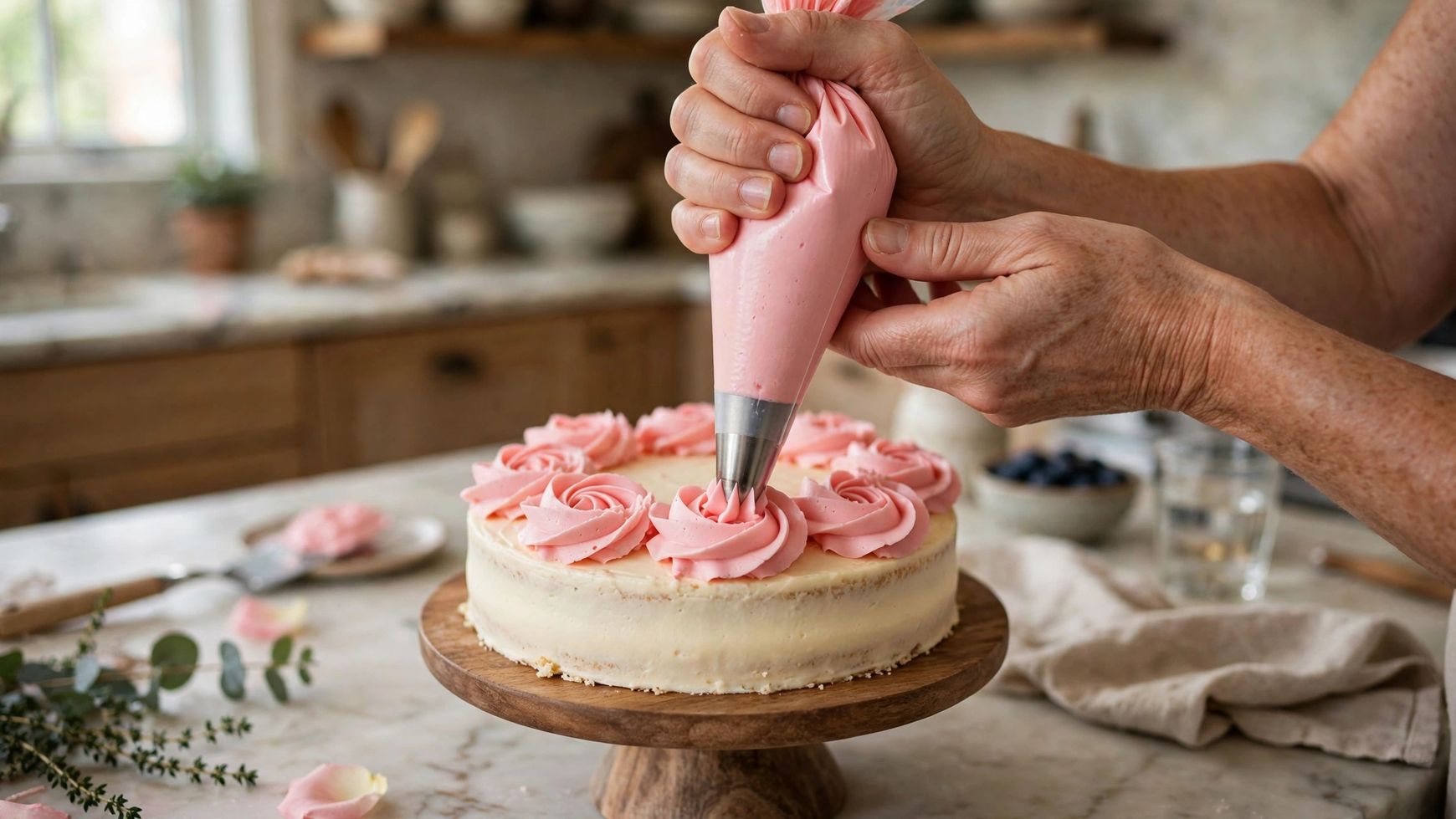
Beautiful cakes look like magic, but decorating is a learnable skill built on a few core techniques. With basic tools and one good frosting recipe, your third cake can look bakery-worthy. Start with simple box-mix cakes while you learn — decorating skill matters far more than the recipe at first. The crumb coat is the beginner's secret weapon — it hides every imperfection.
Essential Starter Tools
You need an offset spatula, a bench scraper, piping bags with three basic tips (round, star, petal), and a turntable. That is genuinely enough to start. An inexpensive tool kit used well beats a pricey kit gathering dust.
Choose Your Frosting
American buttercream is easiest for beginners — sweet, stable, and pipeable. Swiss meringue buttercream is silkier but fussier to make. Room-temperature butter and sifted sugar are the difference between smooth and gritty.
Level, Fill, and Crumb Coat
Level domed layers with a serrated knife, add filling, then spread a thin crumb coat to trap loose crumbs. Chill the cake for 20 minutes. Never skip the chill — cold cake is ten times easier to frost.
Get Smooth Sides
Apply a generous final coat, then hold the bench scraper vertical and rotate the turntable in one smooth motion. Fill gaps and repeat until even. Confidence shows in the finish — hesitant scraping leaves marks.
Easy Designs That Impress
Pipe star-tip rosettes around the top edge, pour a chocolate drip down the sides, or press sprinkles along the bottom border. Fresh pesticide-free flowers add instant elegance. One well-executed technique beats five messy ones.
Practice and Storage
Practice piping on parchment paper before touching the cake. Store finished cakes in the fridge, but serve at room temperature for the best flavor. Photograph every cake from the same angle so you can watch your progress over time. Your fifth cake will embarrass your first — and that is exactly how learning works.