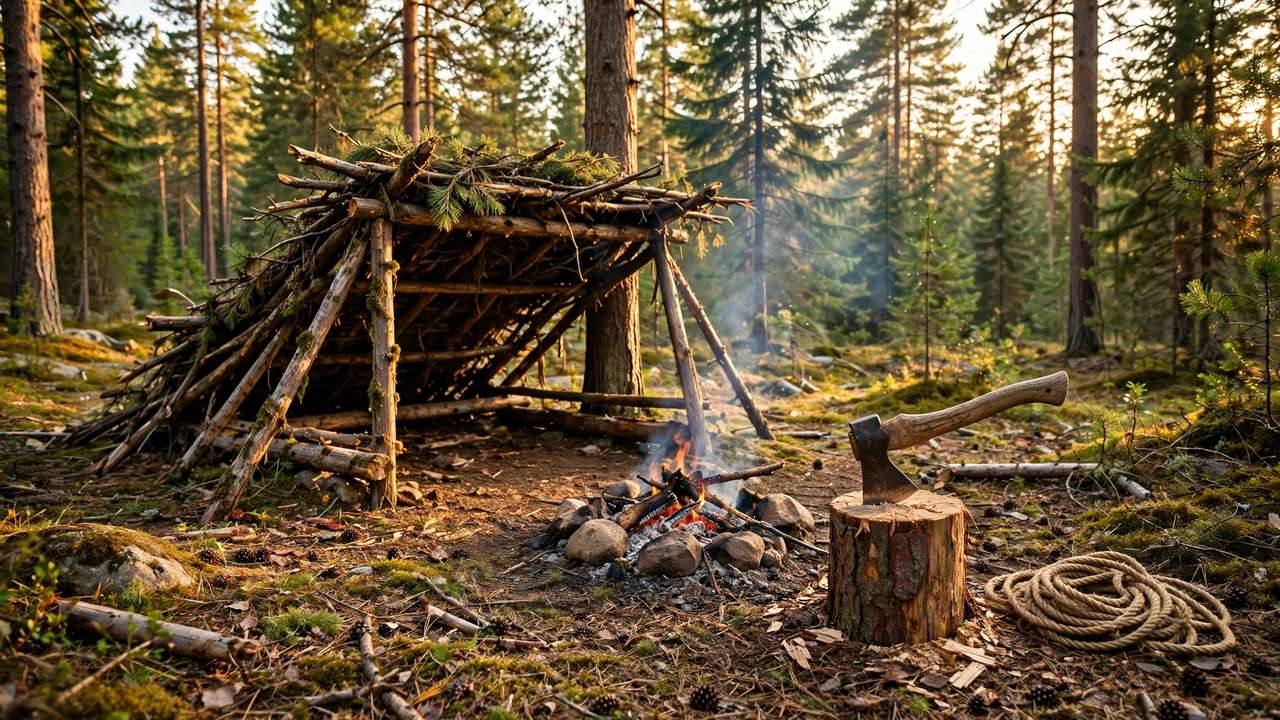
The wilderness doesn't care about your plans — but with the right skills, that's exactly the point. Bushcraft is the art of living comfortably in nature using simple tools, traditional techniques, and knowledge instead of expensive gear. Whether you dream of a quiet overnight camp or just want the confidence to handle yourself outdoors, these beginner basics are where every expert started.
The Four Pillars: Fire, Shelter, Water, Food
Every outdoor situation reduces to four needs. Fire comes first in cold weather: practice lighting one with a ferro rod (spark striker) and natural tinder like dry bark or feather sticks — matches run out, skill doesn't. Shelter keeps you alive when weather turns: learn a simple tarp A-frame setup and a debris hut; both can be built in under an hour. Water is non-negotiable — carry more than you think you need, know how to find it (valleys, animal tracks, green vegetation), and always purify: boil for one minute or use a filter plus tablets. Food is the least urgent for a beginner — pack extra rations and treat foraging as a skill to learn slowly with an expert, never alone.
Your Starter Kit (Simple and Cheap)
You need far less than shops suggest. A fixed-blade knife (full tang, 10–12 cm blade) handles carving, food prep, and feather sticks. A ferro rod throws 3000°C sparks in any weather. A 3×3 m tarp plus 15 m of paracord becomes a shelter in minutes. Add a headlamp, a whistle (three blasts = distress signal), a small first-aid kit, and a metal pot for boiling water. That's it — everything else is comfort, not necessity. The whole kit can cost less than one fancy "survival gadget."
Safety Rules Every Beginner Must Follow
Tell someone your plan — route, return time, emergency contact. It's the single rule that saves lives. Practice knife safety: always cut away from your body, keep your "blood circle" clear, and never walk with an unsheathed blade. Never eat wild plants or mushrooms on a guess — misidentification can be fatal, and phone apps are not reliable enough. Respect fire bans and local laws: in dry season one spark can start a wildfire, so check regulations and use established fire rings. And follow Leave No Trace — pack out everything and leave the forest looking like you were never there.
Start small: practice fire-lighting and knots in your backyard, then a single overnight trip with an experienced friend. Bushcraft rewards patience — master one skill at a time, and the wilderness stops being intimidating and starts feeling like home.