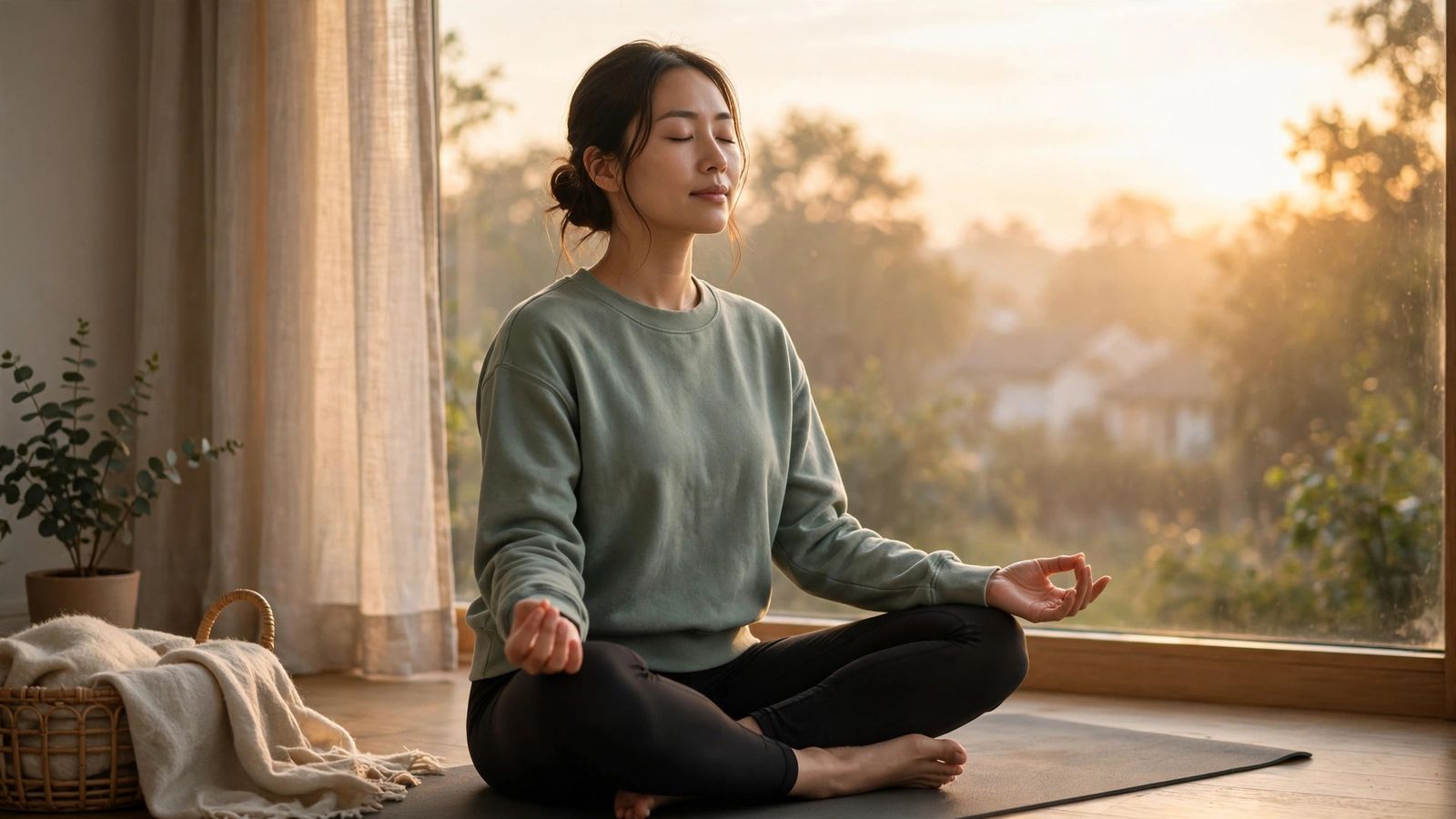
When stress hits, your breathing gets fast and shallow — which tells your brain there's danger, which creates more stress. It's a loop, and slow breathing is the fastest way to break it: extending your exhale directly activates the parasympathetic nervous system, your body's built-in calm-down switch. These five exercises take two minutes and work anywhere — no app, no equipment.
Box Breathing (4-4-4-4)
Inhale for 4 counts, hold for 4, exhale for 4, hold for 4 — then repeat for 4–6 rounds. Used by Navy SEALs and first responders before high-pressure moments, box breathing steadies both heart rate and focus. It's ideal before presentations or difficult conversations.
4-7-8 Breathing
Inhale quietly through your nose for 4 counts, hold for 7 counts, then exhale slowly through your mouth for 8 counts. Repeat 3–4 cycles. The long exhale is the key — exhales longer than inhales signal safety to your nervous system. It works for acute anxiety too — you'll feel your shoulders drop by round two.
Diaphragmatic (Belly) Breathing
Place one hand on your chest and one on your belly. Breathe in slowly so only the belly hand rises — your chest stays nearly still. Exhale slowly and let the belly fall. Do this for 2 minutes. Most stressed people breathe only into their upper chest; belly breathing engages the diaphragm fully, delivering more oxygen per breath and lowering cortisol measurably in studies.
Extended Exhale and Alternate Nostril
Extended exhale: simply breathe in for 4 and out for 6–8, no holds needed — the easiest technique here, perfect for beginners. Alternate nostril breathing: close your right nostril, inhale left; close left, exhale right; inhale right, exhale left — that's one round; do 5 rounds. Research links it to reduced anxiety and better focus, and the counting keeps racing thoughts occupied.
When to Use Them
Use box breathing before anything high-stakes, 4-7-8 when anxiety spikes or sleep won't come, belly breathing as a daily 2-minute reset, and extended exhales in the moment — even at your desk, nobody will notice. Practice while calm so the technique is automatic when you're not.
Stress isn't going away, but your reaction to it is trainable. Pick one exercise, try it right now, and keep it in your pocket for the next hard moment.