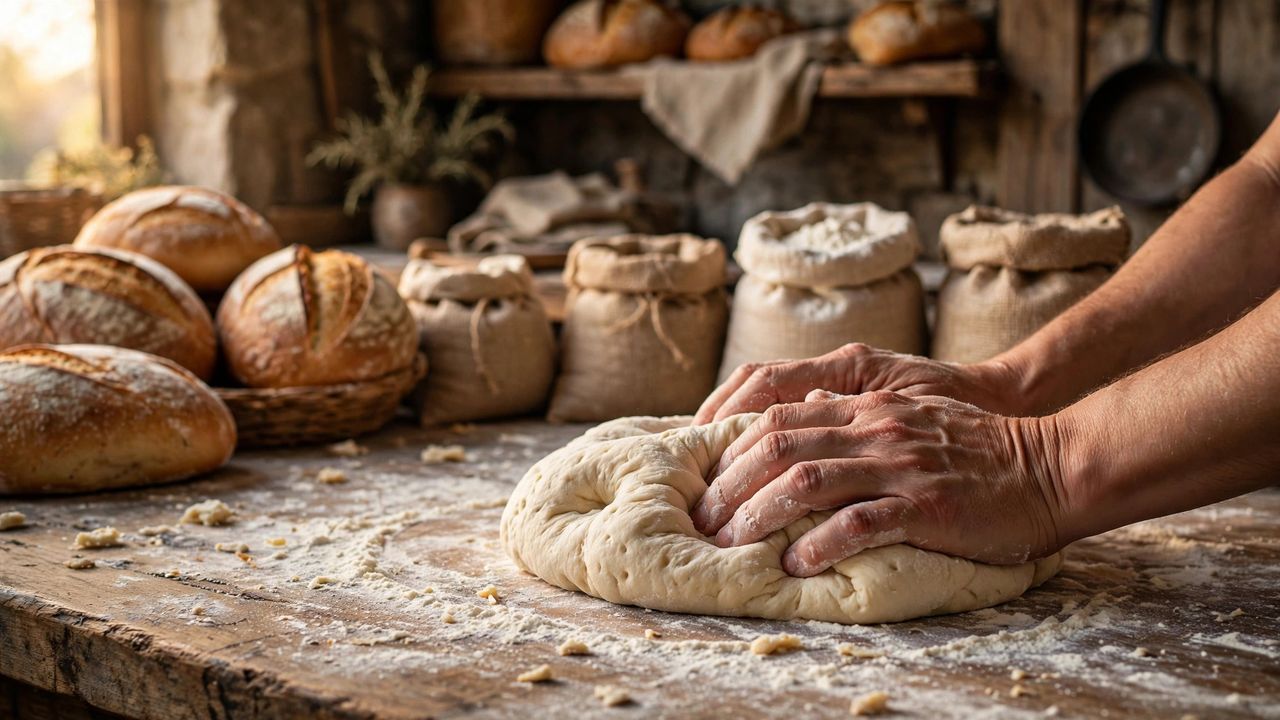
Fresh bread from your own oven tastes nothing like the store-bought kind — and it only takes four ingredients and a free afternoon. Bread rewards patience, not skill: follow the steps, give it time, and your first loaf will impress you.
You Need Less Equipment Than You Think
A big bowl, a wooden spoon, a baking sheet or loaf pan, and your hands — that's it. No stand mixer, no special flour. Start with basic tools and upgrade only when a limitation actually bothers you. A kitchen scale helps a lot, but measuring cups work for loaf one.
Understand the Four Ingredients
Flour provides structure, water wakes up the yeast, yeast makes the gas that lifts the dough, and salt controls flavor and fermentation. Ratios matter more than brands. Weigh or measure carefully on your first tries — consistency is how you learn what "right" feels like.
Knead Until It's Smooth and Elastic
Push, fold, and turn the dough for about ten minutes until it stops sticking and stretches without tearing. This builds the gluten network that traps air. The windowpane test — stretch a piece thin enough to see light through — tells you when you're done. Under-kneaded bread is dense; trust the test.
Let Time Do the Heavy Lifting
After kneading, the dough rests and rises until doubled — usually one to two hours in a warm spot. Don't rush it with a hot oven; yeast likes gentle warmth. Rising is where flavor develops, so a slow rise always beats a fast one. Shape, let it rise once more, then bake until deeply golden.
Cool Before You Cut
The hardest step: waiting. Fresh bread keeps cooking inside as it cools, and slicing early gives you a gummy crumb. Give it at least 30 minutes on a rack — the crust crackling as it cools is your reward. Then slice, butter, and enjoy the best bread you've ever had.