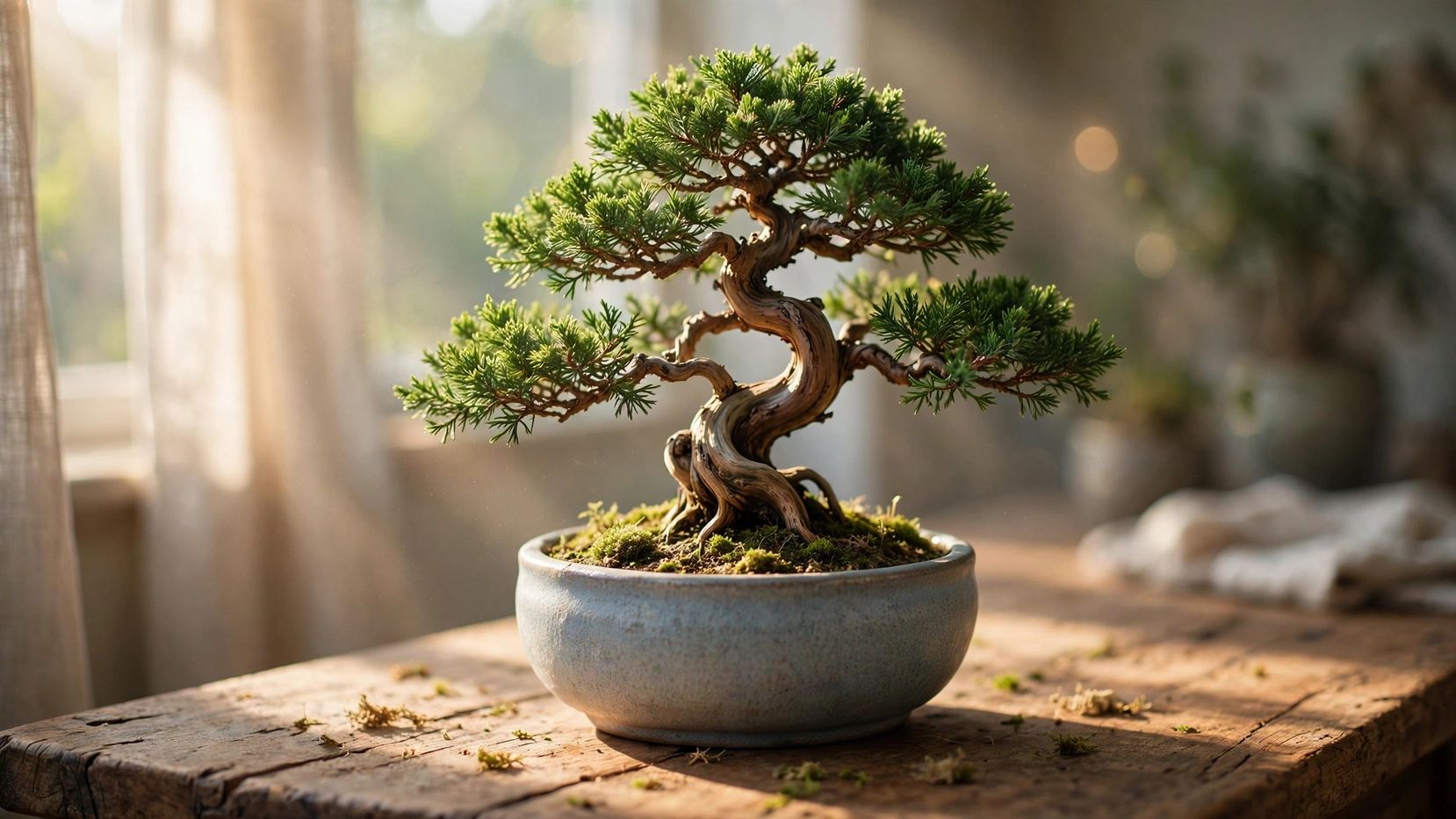
Bonsai is the art of growing miniature trees in pots — a living sculpture that rewards patience. The number-one beginner mistake is keeping a bonsai indoors when it needs outdoor light; most species thrive outside.
Best Beginner Species
Ficus, Chinese elm, and juniper forgive beginner mistakes and grow vigorously. Start with a ficus if you want indoor bonsai — it tolerates low light better than almost any other species. Avoid expensive specimen trees until your skills are proven.
Watering: The Daily Ritual
Bonsai pots are shallow, so soil dries fast — check moisture daily by touching the top inch. Water when the soil surface feels dry, and water thoroughly until it drains from the bottom. Overwatering kills more bonsai than underwatering, so never leave pots sitting in water.
Light and Placement
Most bonsai need several hours of direct sun; junipers and pines especially. If your tree looks leggy with sparse leaves, it is begging for more light — move it, do not fertilize. Rotate the pot weekly for even growth.
Pruning and Pinching Basics
Maintenance pruning keeps the miniature shape; pinch new shoots back to 2–3 leaves during the growing season. Prune for shape little and often — drastic cuts stress the tree and ruin its balance. Always use sharp, clean concave cutters for branch work.
Wiring Branches Safely
Aluminum wire wrapped around branches lets you bend them into graceful shapes. Check wires monthly and remove them before they bite into the bark — wire scars are permanent. Bend slowly over days rather than forcing a dramatic curve at once.
Feeding and Repotting
Feed with balanced bonsai fertilizer during the growing season and repot every 2–3 years to refresh soil and trim roots. Repot in early spring before buds open — timing matters more than technique. After repotting, keep the tree shaded and misted for two weeks.