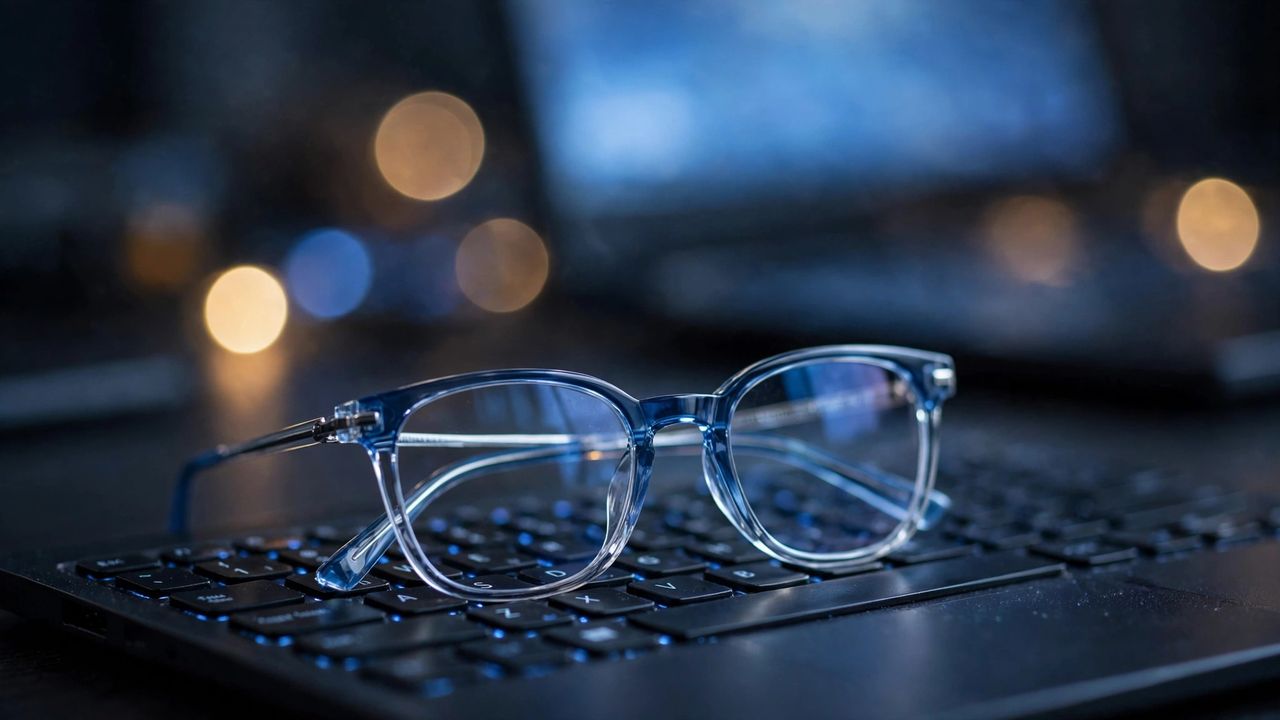
Tired eyes after a long screen day. Headaches that arrive with the evening. Blue light glasses promise relief — but do they deliver, or is it clever marketing? The honest answer is nuanced: the science is mixed, but many people genuinely feel better. Here is what the evidence says and how to buy wisely.
What the science actually says
Blue light from screens can disrupt sleep when it hits your eyes late at night, and glare plus poor blinking cause most screen fatigue. Most daytime eye strain comes from glare and dryness, not blue light itself — glasses help mainly by cutting glare and reminding you to blink. Studies show the sleep benefit is real for evening screen use, though.
When they are worth trying
If you work on screens after sunset, get frequent evening headaches, or struggle to fall asleep after late scrolling, a pair is a cheap experiment. Buy for the evening first: wear them the last two hours before bed and judge your sleep, not your afternoon comfort. Gamers and night-shift workers report the biggest wins.
What to look for when buying
Skip the fashion markup: look for lenses that filter a meaningful portion of blue light, an anti-reflective coating, and comfortable frames you will actually wear. The best blue light glasses are the ones you forget you are wearing — fit beats filter specs every time. Prescription wearers should get proper prescription lenses, not clip-ons.
The free fixes that matter more
Glasses are a supplement, not a solution. Follow the 20-20-20 rule (every twenty minutes, look twenty feet away for twenty seconds), lower screen brightness to match your room, and use night mode after dark. Blink deliberately during long sessions — screen users blink half as often, and dry eyes cause most of the ache. Pair these habits with glasses for the full effect.
Blue light glasses are not magic, but they are not a scam either. For evening screen users, they are a reasonable tool — especially combined with the free habits that do the heavy lifting.