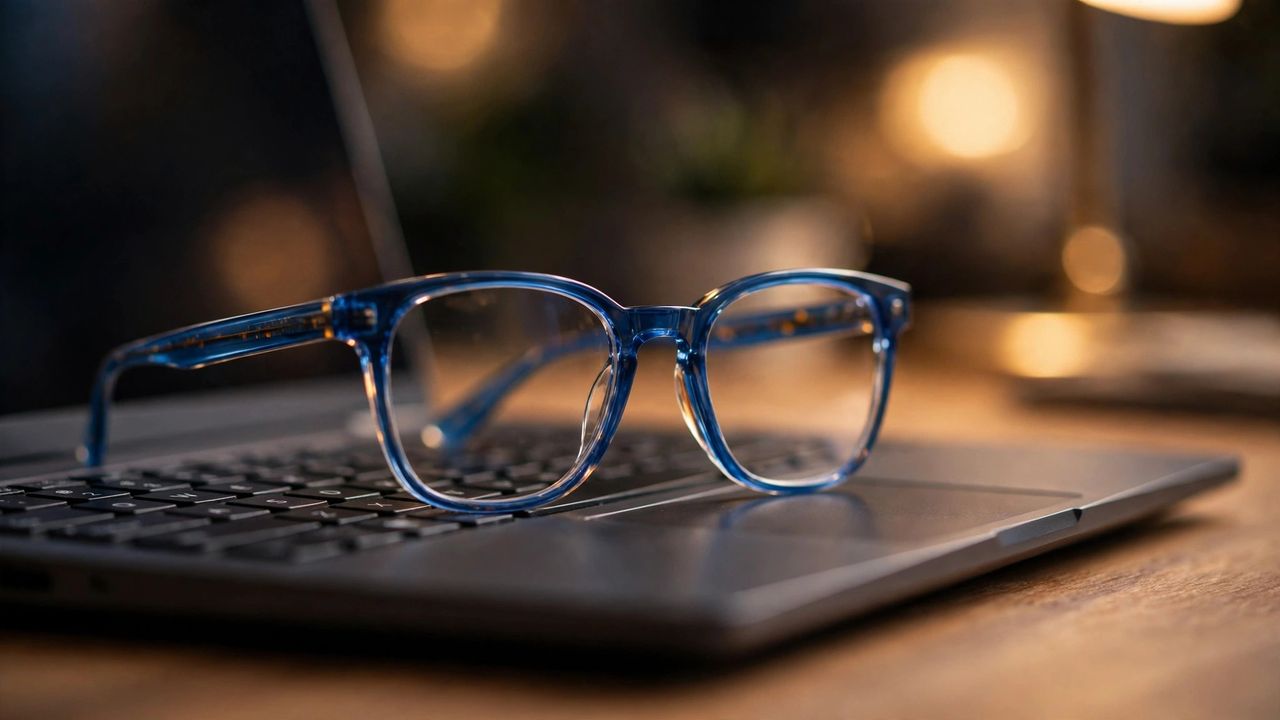
Blue light glasses are everywhere, promising less eye strain, fewer headaches and better sleep. But walk into any eye doctor's office and you will hear a more skeptical story. The science in 2026 has settled most of the debate, and the truth is more interesting than the marketing. Here is what the research actually says.
What the Studies Really Found
Large reviews of clinical trials keep reaching the same conclusion: there is no strong evidence that blue light from screens damages your eyes. No quality study has proven that screen blue light damages your eyes. The eye strain you feel after eight hours is real, but researchers blame it on reduced blinking and poor ergonomics, not on blue wavelengths specifically.
Sleep Is a Different Story
While eye damage claims fall flat, sleep is where blue light glasses have some genuine support. Amber-tinted glasses worn two to three hours before bed can genuinely help you fall asleep faster. Clear-lens glasses, the stylish ones most people buy, filter far less blue light and show little effect on sleep in studies. If better sleep is your goal, the tint matters more than the brand.
What Actually Fixes Eye Strain
If your eyes burn by 5 PM, the fix is probably not in your glasses. Try the 20-20-20 rule: every 20 minutes, look at something 20 feet away for 20 seconds. Blinking fully and looking away regularly beats any special lens for eye strain. Match your screen brightness to your room, raise the monitor so your eyes look slightly downward, and keep it an arm's length away.
When Buying Them Still Makes Sense
So should you buy a pair? If you work nights and want to protect your sleep, amber-tinted glasses are a cheap, low-risk tool. Buy amber-tinted glasses for evening use if sleep is your goal, skip clear lenses for eye protection. They are also fine as a placebo-free comfort choice if you simply like how they feel. Just do not expect them to fix headaches caused by an uncorrected prescription, get your eyes checked instead.
The 2026 verdict is clear: blue light glasses are not eye medicine, but amber pairs can be a useful sleep tool. Fix your blinking, your brightness and your bedtime screen habit first, those are the upgrades with real evidence behind them.