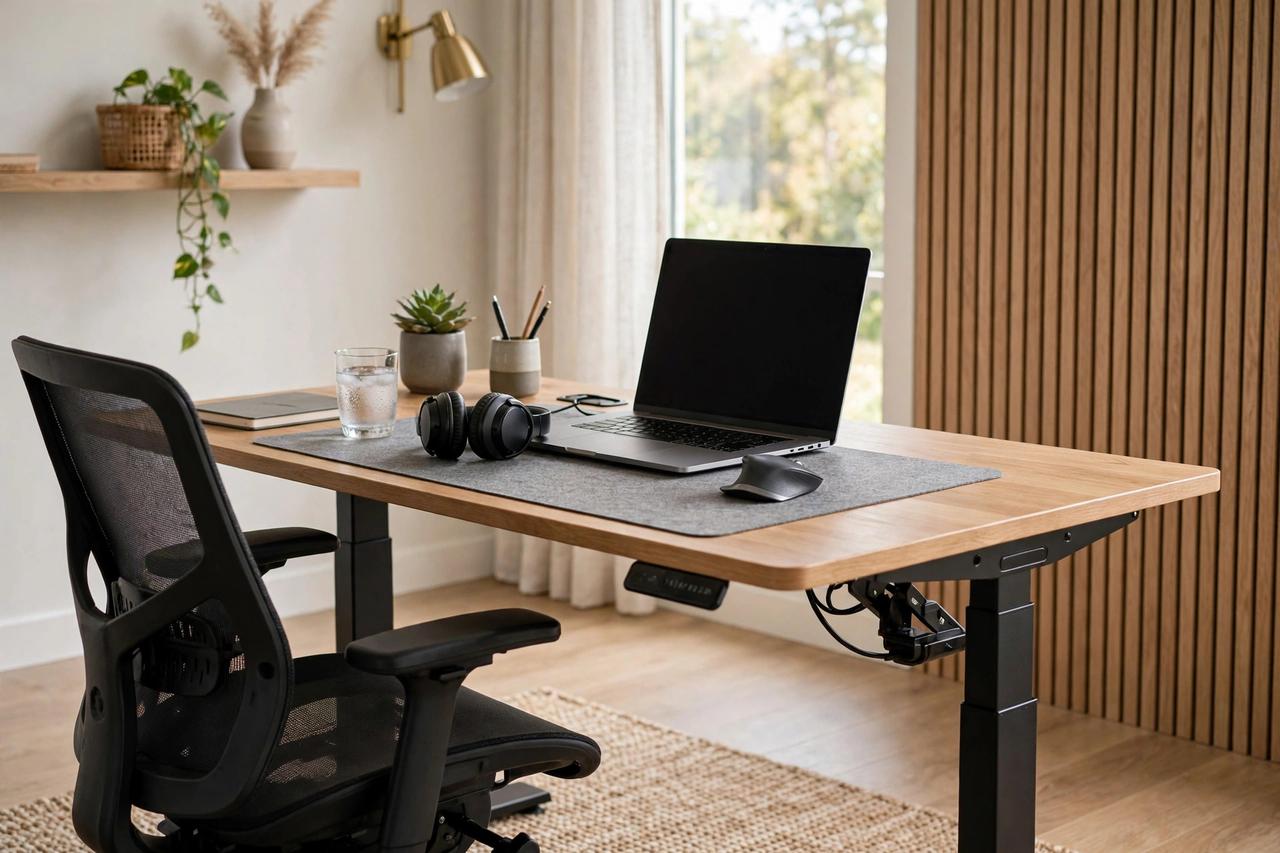
Sitting all day is rough on the body — stiff hips, a sore lower back, and that 3 p.m. slump. Standing desks will not turn you into an athlete, but alternating between sitting and standing genuinely reduces back pain and keeps energy steadier through the afternoon. With prices from under $200 to well over $1,000, here is how to choose wisely in 2026.
Electric vs Manual: The Core Decision
Electric desks adjust at the touch of a button, remember your favorite heights, and make switching positions effortless — which means you will actually do it. Manual crank desks cost far less and never need an outlet, but the hassle of cranking means most people stop adjusting after the first week. If your budget allows, electric is the one that changes habits instead of gathering dust.
Stability Matters More Than You Think
A wobbly desk at standing height is miserable. Look for a steel frame with a crossbar or dual motors, a weight capacity above 200 lbs, and a thick desktop. Test reviews specifically for wobble at full extension, because a desk that feels rock-solid at sitting height can sway noticeably when raised. Deeper desktops (30 inches or more) give your monitor and keyboard room without crowding.
Ergonomics: Setting It Up Right
Proper setup matters as much as the desk itself. Your elbows should rest at about 90 degrees with wrists straight, and the top of your monitor at or just below eye level. Start with 20 to 30 minutes of standing per hour and build up — jumping to all-day standing causes its own aches. An anti-fatigue mat and supportive shoes make a bigger difference than most people expect.
What to Avoid
Skip single-motor frames if you run dual monitors, avoid glass tops that show every fingerprint, and do not buy a desk without checking the minimum and maximum height range against your own body. Measure twice, buy once — and remember that the best standing desk is the one you will actually raise every single day.