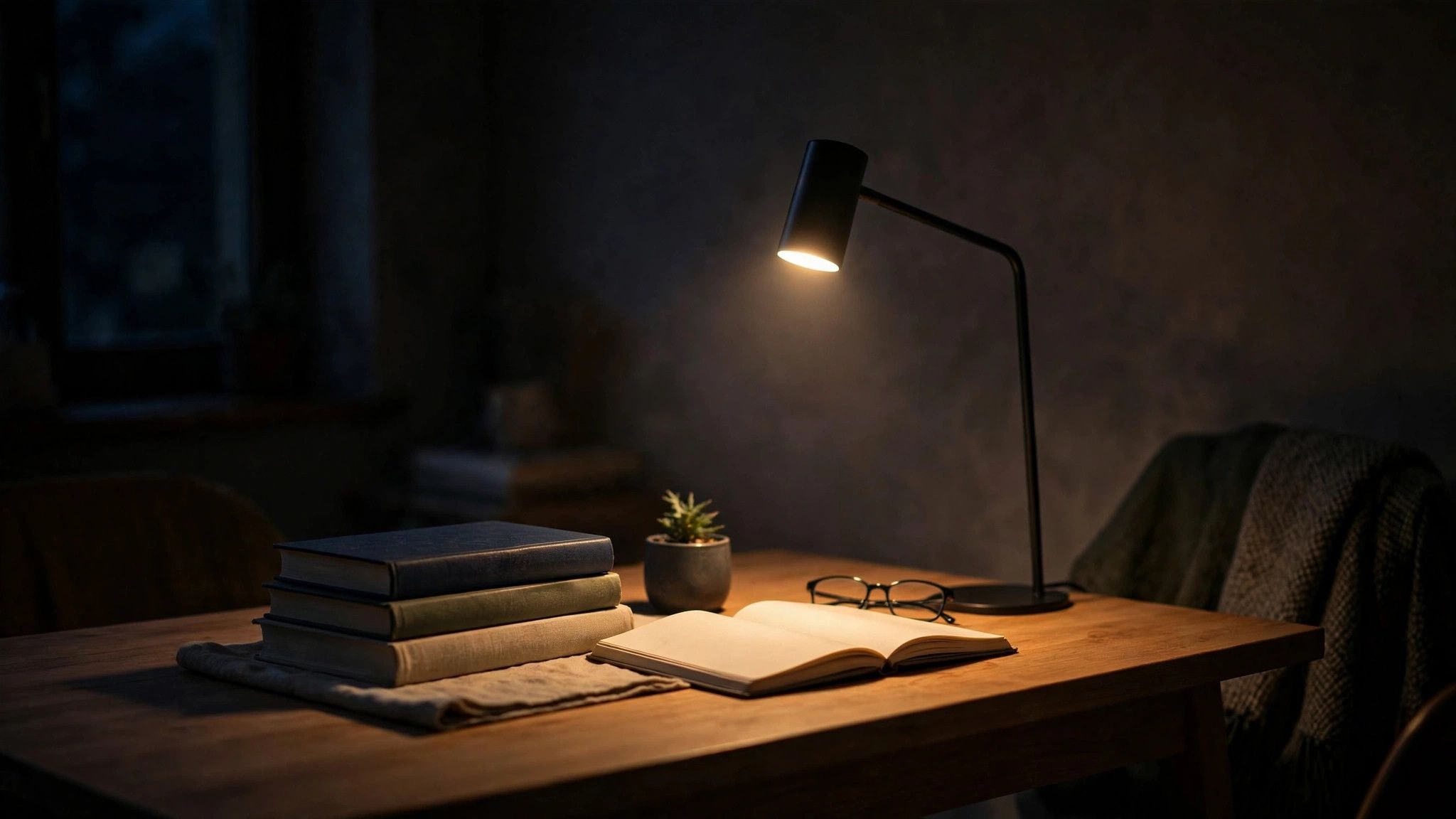
You probably spend more hours under your desk lamp than you realize, and bad lighting is quietly costing you comfort and focus. In 2026, desk lamps have become genuinely sophisticated tools — with adjustable color temperature, flicker-free LEDs, and eye-care engineering that actually works. Here is how to choose one.
Why your lighting matters
Harsh overhead light and dim corners force your eyes to work overtime, causing fatigue, headaches, and that mid-afternoon slump. A good desk lamp puts bright, even light exactly where you need it while keeping the surrounding area softly lit. The goal is contrast without glare: your work brightly lit, your screen not competing with a bulb behind it.
The specs that count
Look for 800 to 1100 lumens for serious desk work, a Color Rendering Index (CRI) of 90-plus so colors look true, and adjustable color temperature from warm 2700K to daylight 5000K and up. Warm light suits evenings, cool light boosts daytime alertness. Flicker-free drivers and diffused panels prevent the invisible strobing that strains eyes over long sessions. Brightness should be stepless, not stepped, so you can dial in exactly what feels comfortable.
Eye-care features worth paying for
Asymmetric or ring-shaped light heads spread illumination evenly without hot spots. Auto-dimming sensors adjust to ambient light, and some premium models track your usage patterns. Flexible arms and rotating heads let you aim light at the page, not at your eyes. If you wear glasses, test for reflections before committing.
Our buying advice
Prioritize adjustability over smart features — a lamp you can position perfectly beats one with an app you will never open. Buy for your actual desk setup: clamp lamps save space, weighted bases move easily, and USB-C powered models travel well between home and office. Good light is a daily quality-of-life upgrade, and your eyes will notice the difference within a week.