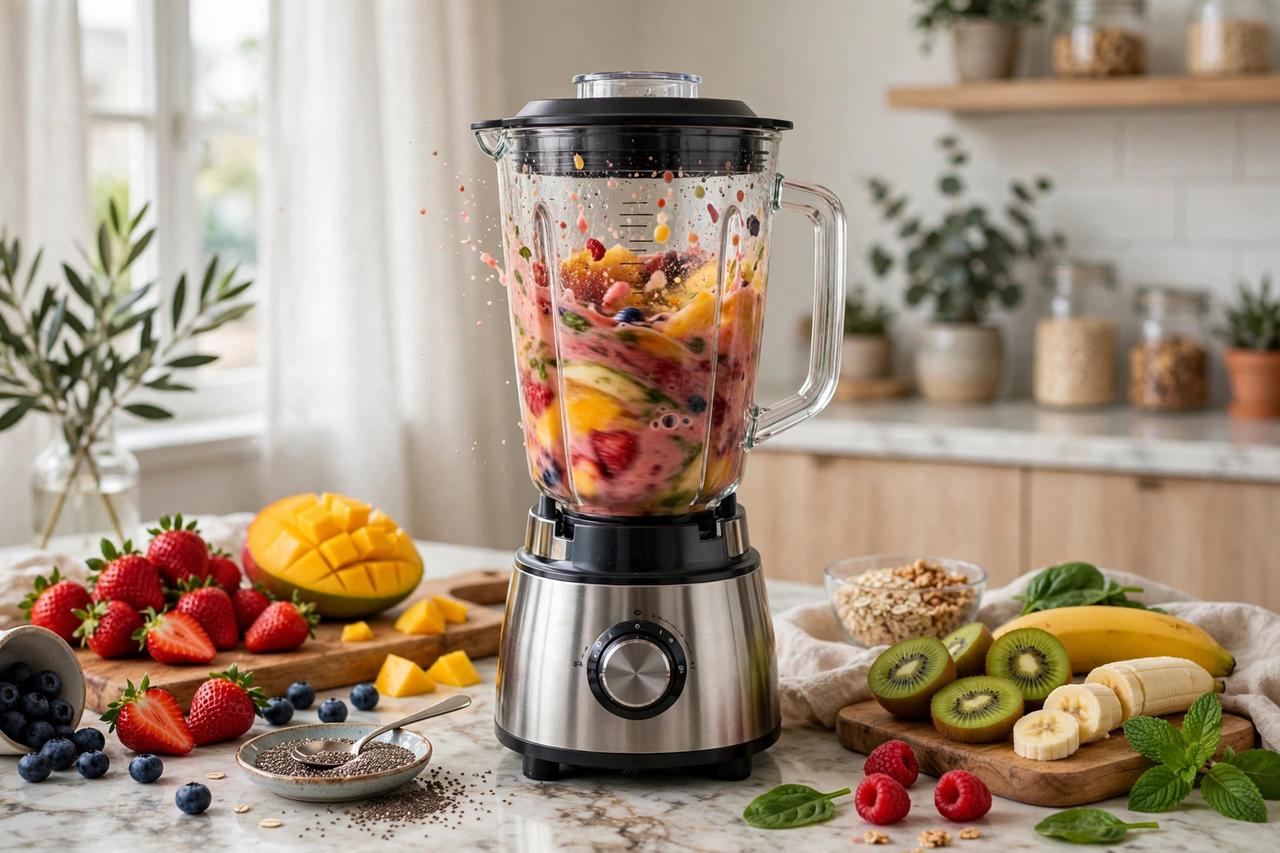
A good blender earns a permanent spot on the counter; a bad one becomes an expensive cupboard ornament. Whether you want silky smoothies, creamy soups, or homemade nut butter, the right choice depends less on flashy presets and more on motor power, blade design, and build quality.
Power: What the Watts Really Mean
For daily smoothies with frozen fruit and ice, look for at least 1,000 watts. Lower-powered models stall, overheat, and leave chunks. High-performance blenders in the 1,400 to 1,800 watt range crush ice and nuts effortlessly and run for years. But wattage is not everything — blade geometry and jar shape matter just as much for pulling ingredients down into a smooth vortex.
Jar Types and Capacity
Wide, squat jars blend thick mixtures like nut butter better than tall narrow ones. Tritan plastic jars are light and shatter-resistant; glass jars resist stains and odors but are heavy and can crack with thermal shock. A 64-ounce jar suits families, while a 32-ounce jar plus personal cups is ideal for one or two people making daily smoothies.
Durability and Warranty
The motor is the heart of the blender — check for metal drive gears instead of plastic, and warranties of 5 to 10 years on premium models. Budget blenders often die within two years of heavy use, so a mid-range model with a solid warranty usually costs less per year than replacing a cheap one repeatedly. Dishwasher-safe parts save real time every single day.
Getting the Most From Your Blender
Layer ingredients with liquids first, then soft items, then frozen on top, start on low speed and ramp up, and use the tamper for thick blends instead of adding water. Clean immediately by blending warm water with a drop of soap for 30 seconds. Treat it well, and a quality blender will outlast three cheap ones.