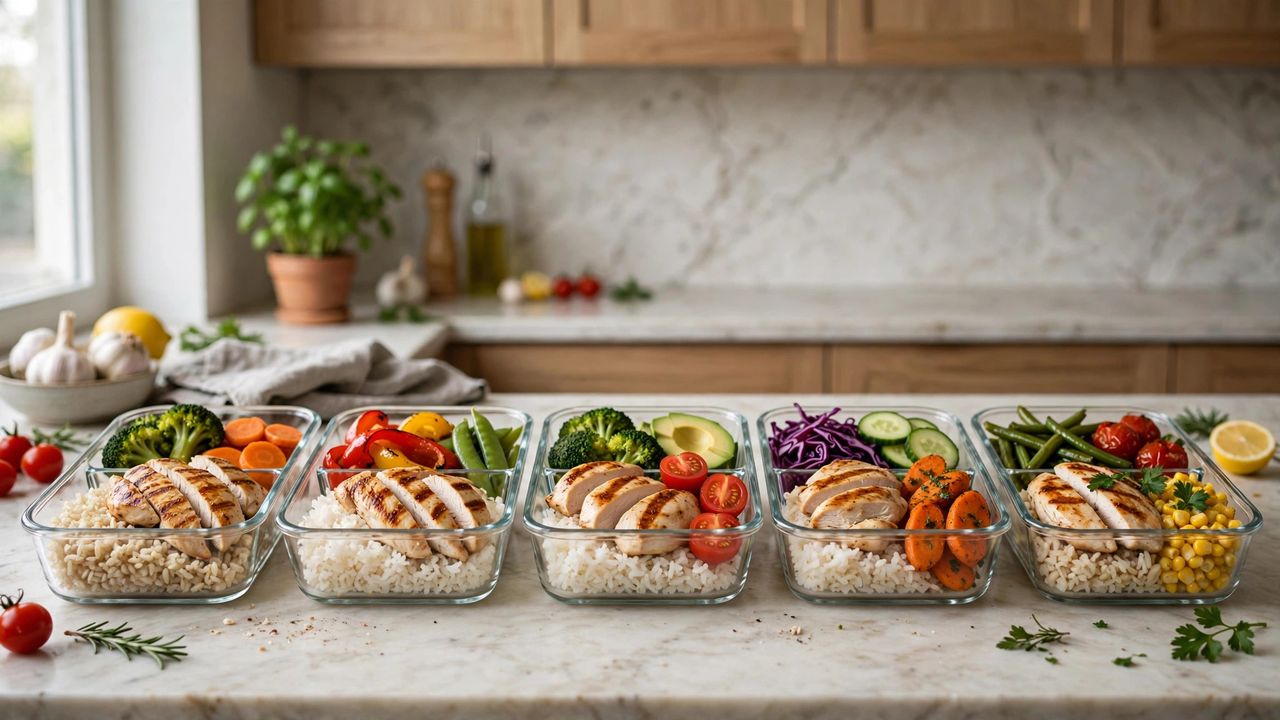
The 6 PM question — "what is for dinner?" — drives more takeout orders than hunger ever does. Batch cooking solves this by turning two or three focused cooking hours into a week of ready-to-eat meals. You spend less money, eat healthier, and stop stressing about dinner every night.
1. Plan before you shop
Pick 3–4 base recipes for the week that share ingredients — think rice bowls, pasta bakes, curries, and sheet-pan meals. Write a single shopping list and buy in bulk. Overlapping ingredients means less waste and a cheaper grocery bill, because everything you buy actually gets used.
2. Dedicate one cooking session
Choose a day — Sunday works for most people — and treat cooking like an appointment. Start with what takes longest (grains, roasted vegetables, proteins), and prep the rest while they cook. A two-to-three-hour session is enough for most households once you get the rhythm down.
3. Master the component method
You do not have to cook complete meals. Prepare versatile components instead: a grain, two proteins, roasted vegetables, a sauce, and fresh toppings. Components mix into different meals all week, so Thursday's dinner does not taste like Monday's leftovers.
4. Store and reheat like a pro
Cool food quickly before refrigerating, use airtight containers, and label everything with the date. Most cooked meals stay fresh 3–4 days in the fridge; freeze what you will eat later in the week. Glass containers reheat more evenly and let you see what is inside at a glance.
5. Keep it realistic and flexible
Do not aim for perfection — batch cooking five dinners and buying two lunches still beats cooking from scratch daily. Start with just one batch session a week and adjust the menu based on what your family actually ate. The system should fit your life, not the other way around.