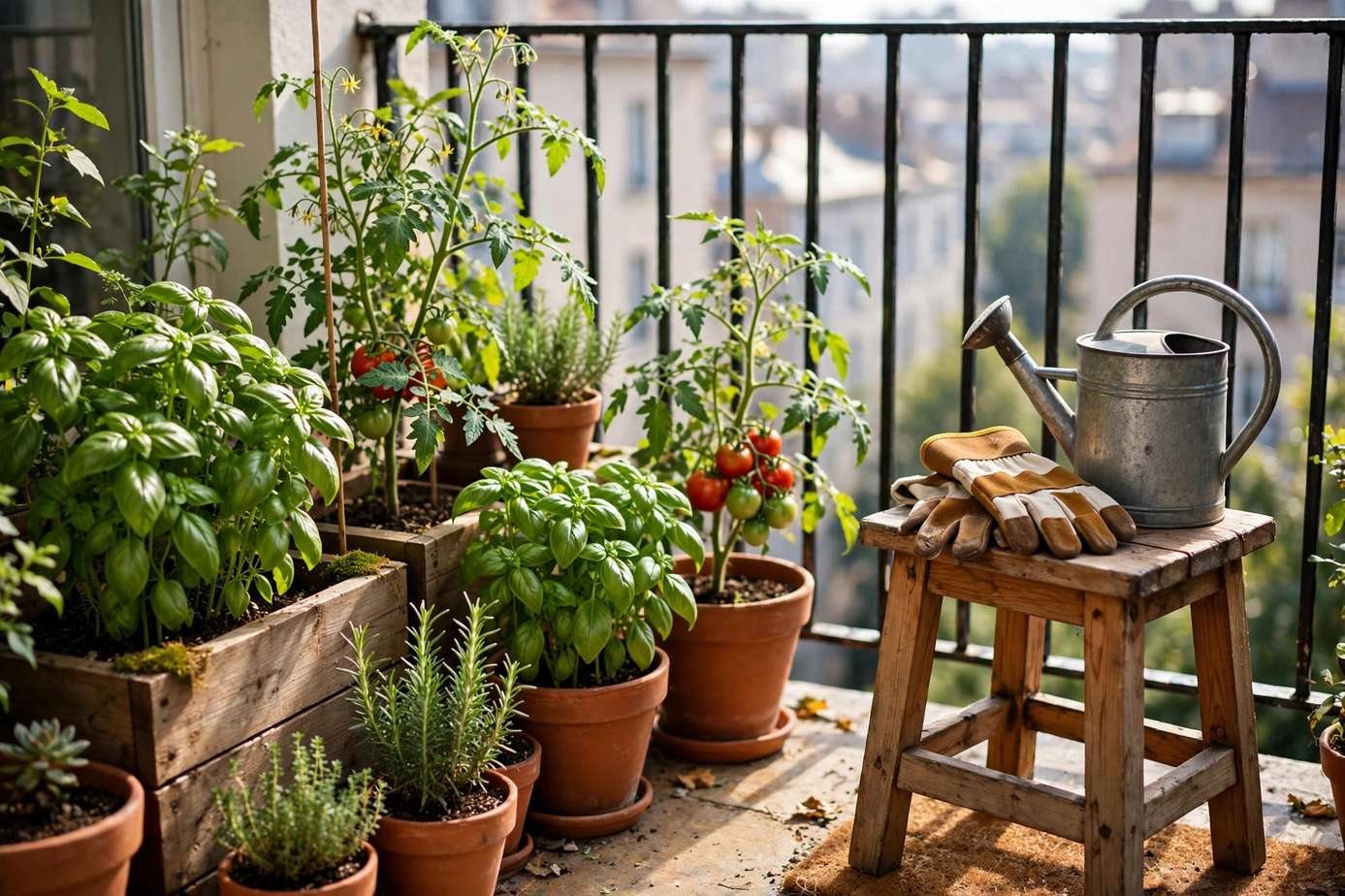
You don't need a backyard to grow food. A sunny balcony, a few containers, and some good soil can produce fresh herbs, salads, and even tomatoes all season. In 2026, balcony gardening is booming as food prices stay high and apartment dwellers discover how much fits in small spaces. Here's your beginner's path to a productive little garden.
Start with easy wins
Begin with herbs (basil, mint, parsley, chives) and leafy greens (lettuce, spinach, arugula) — they grow fast, forgive mistakes, and get harvested within weeks. Cherry tomatoes in a big pot are the classic confidence-builder. Your first season's goal is success, not scale — five thriving pots beat twenty struggling ones.
Containers matter more than you think
Bigger pots grow bigger harvests: small pots dry out fast and starve roots. Use containers with drainage holes, quality potting mix (not garden soil), and mulch on top to hold moisture. Invest in the largest pots your space allows — container size is the single biggest factor in balcony yields. Fabric grow bags are a cheap, excellent option.
Feed and water smart
Container plants drink more than in-ground ones, especially in summer — check soil daily in hot weather and water deeply rather than sprinkling. Feed with liquid fertilizer every two weeks during the growing season. Water the soil, not the leaves, in the morning — it prevents disease and reduces waste. Self-watering pots help busy beginners.
Use your vertical space
Balconies are small, so grow up: trellises for beans and cucumbers, hanging baskets for strawberries, railing planters for herbs, and stacked planters for salads. Reflective surfaces behind plants bounce light onto them. Think in three dimensions — vertical growing can triple a small balcony's harvest.
Fresh food a few steps from your kitchen is one of life's quiet luxuries. Grab a few pots this weekend, plant something you love to eat, and enjoy your first balcony harvest in 2026.