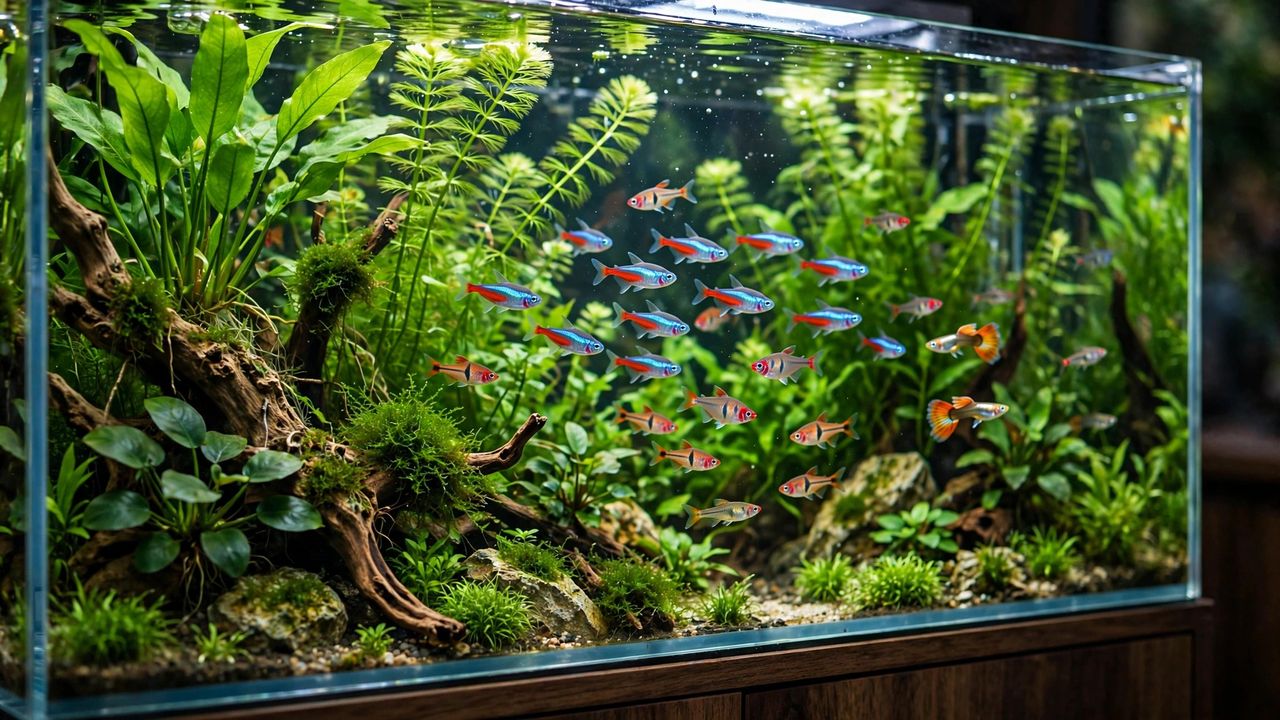
Most first aquariums fail in the first two weeks — not because fish are hard, but because the tank wasn't cycled first. Get the setup right and a freshwater tank is a calm, low-maintenance joy. Here's the beginner-proof path to a healthy first tank.
Bigger Tank, Fewer Problems
Counterintuitively, a 20-gallon tank is easier than a 5-gallon bowl. Larger water volumes dilute waste and resist temperature swings. Buy a 20-gallon starter kit with filter, heater, and light included ($100–$150). Skip the fishbowl entirely — small volumes are unstable and cruel to fish.
Cycle the Tank BEFORE Adding Fish
This is the step everyone skips and regrets. The nitrogen cycle grows beneficial bacteria that convert toxic fish waste into safe compounds. Set up the tank with filter running, add a bacterial starter, and wait 1–2 weeks, testing water with a liquid test kit. Add fish only when ammonia and nitrite read zero. No shortcuts.
Choose Forgiving Beginner Fish
Start with hardy species: betta (alone in 5+ gallons), guppies, platies, neon tetras, or corydoras catfish. Research each species' needs first — never mix a betta with guppies, and never overstock. The rule of thumb: one inch of fish per gallon is a starting limit, and fewer fish is always safer.
The Weekly Routine That Keeps Fish Alive
Healthy tanks need little: feed once daily, only what fish eat in 2 minutes (overfeeding is the top beginner killer). Change 20–25% of the water weekly with dechlorinated water at the same temperature. Wipe algae, check the filter monthly, and never wash filter media with tap water — it kills the beneficial bacteria you cycled for.
An aquarium is living furniture — beautiful, calming, and alive. Cycle first, stock slowly, and you'll have a thriving underwater world within a month.