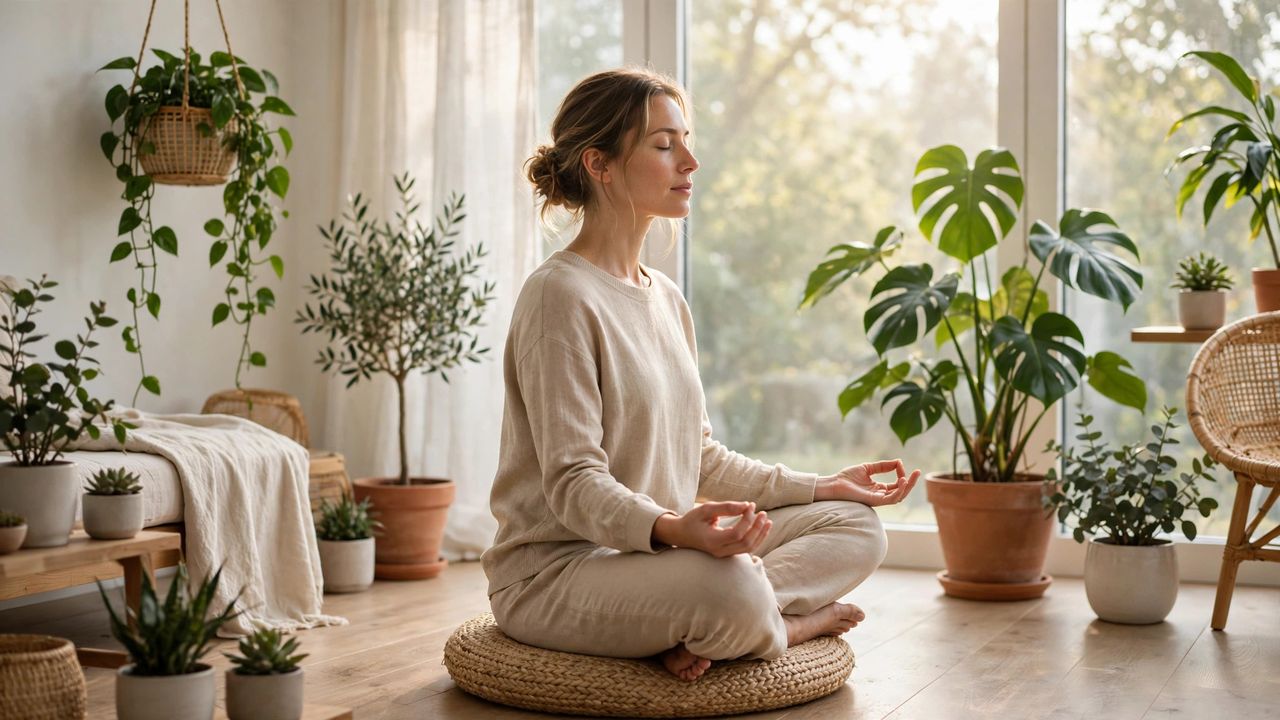
Anxiety feels overwhelming, but it responds remarkably well to practical, everyday tools. You can't always control the thoughts, but you can calm the body, steady the routine, and lower the triggers — and that changes everything. Here are evidence-backed strategies that genuinely help in 2026.
Calm your body with breathing
Slow breathing signals safety to your nervous system. Try the 4-7-8 technique: breathe in for four counts, hold for seven, exhale slowly for eight. Even two minutes of deliberate slow breathing measurably lowers heart rate and tension. Your breath is the fastest remote control you have for your nervous system — learn one technique and practice it daily.
Build an anchor routine
Anxiety thrives on chaos. A simple morning routine — same wake time, daylight, a walk, a real breakfast — gives your brain predictable structure. Limit caffeine after noon, since it mimics and amplifies anxiety symptoms. Consistent sleep and a steady morning routine do more for daily anxiety than any single trick.
Shrink worries with action and limits
Write your worries down, then sort them into "can act on" and "can't control" — take one small step on the first list and release the second. Cap news and social media time, because doomscrolling feeds the spiral. A worry written on paper is half its size; a worry looping in your head is twice its size.
Know when to get professional help
If anxiety disrupts your sleep, work, or relationships for weeks, or brings panic attacks or constant dread, talk to a doctor or therapist — effective treatments exist, from therapy to medication. Seeking help is a strategy, not a failure — the strongest move is using every tool available.
Anxiety is manageable, and most people improve significantly with consistent small practices. Start with breathing and routine today, and if it persists, reach out — support is closer than you think in 2026.