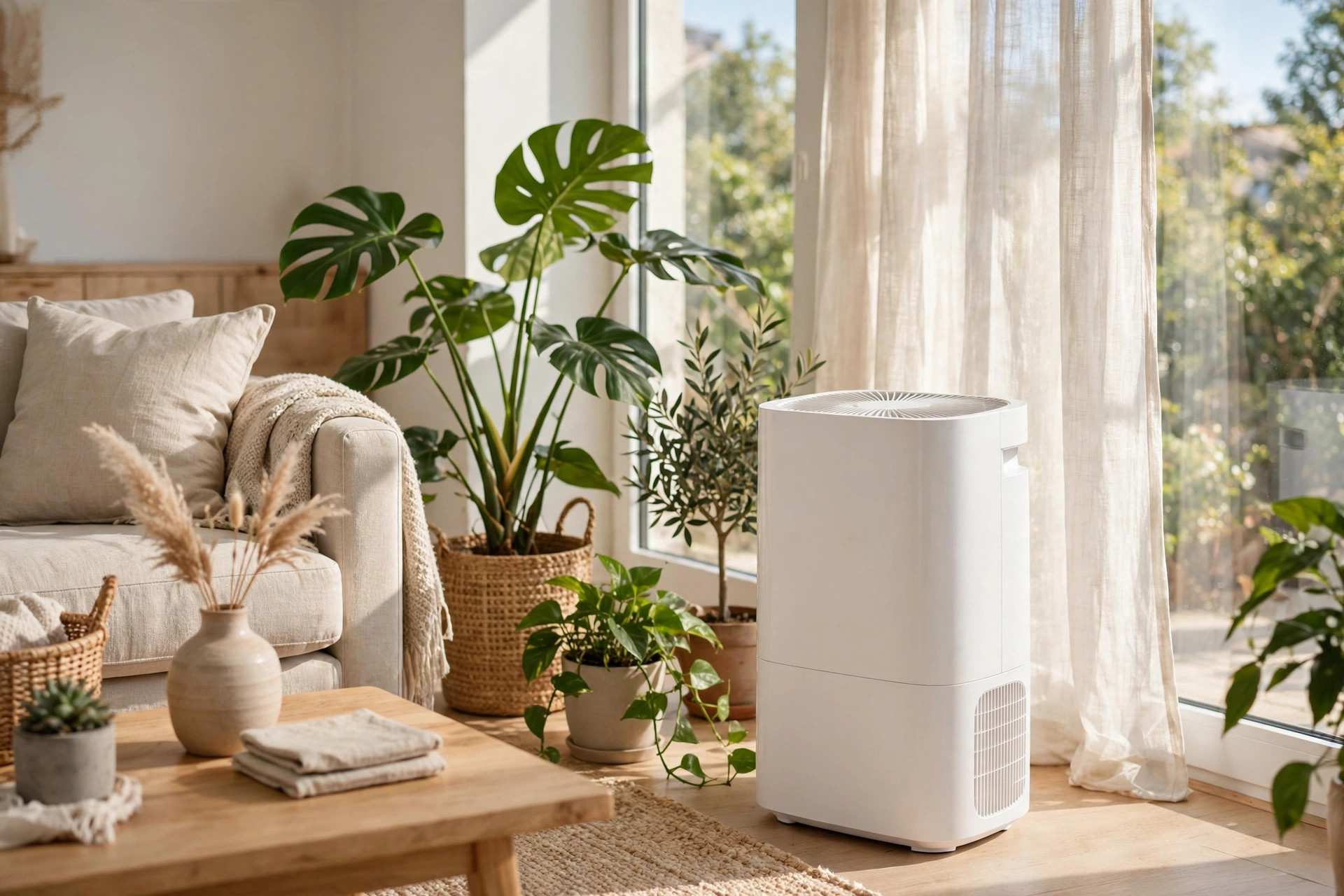
Indoor air can be two to five times more polluted than outdoor air, full of dust, pollen, pet dander, and cooking fumes. A well-chosen air purifier genuinely helps allergy and asthma sufferers — but only if you buy the right size and filter type. Here is how to choose wisely.
1. Insist on True HEPA
"True HEPA" filters capture 99.97% of particles down to 0.3 microns — dust, pollen, mold spores, and pet dander. Marketing terms like "HEPA-like" or "HEPA-style" are not certified and perform far worse. If the box does not say True HEPA or H13, keep shopping — this is the single most important spec.
2. Match CADR to Your Room Size
CADR (Clean Air Delivery Rate) tells you how much clean air a purifier produces. As a rule, the CADR should be at least two-thirds of your room's square footage. An undersized purifier running on max is noisier and less effective than a properly sized one on medium — bigger is better.
3. Add Activated Carbon for Smells
HEPA handles particles but not odors, smoke, or VOCs from cooking and cleaning products. A thick activated-carbon filter absorbs those gases. Pet owners and city dwellers should never skip the carbon stage — it is what removes the smells HEPA cannot touch.
4. Check Noise Levels
You will run this machine for hours daily, often while sleeping. Look for models under 30 dB on low or sleep mode — about a whisper. Ignore impressive max-speed specs if the low-speed noise is annoying; the quiet setting is the one you will actually live with.
5. Calculate Filter Replacement Costs
A cheap purifier with $80 replacement filters every six months quickly becomes the expensive option. Check filter prices and lifespans before buying, and set a calendar reminder to replace them. Over five years, filter costs often exceed the machine's price — budget for the real total.
6. Skip the Gimmicks
Ionizers, UV lights, and "plasma" features add cost and sometimes produce ozone without meaningful benefits. A simple machine with True HEPA plus activated carbon outperforms most feature-packed models — simplicity wins. Auto mode with an air-quality sensor is the one smart feature worth having.