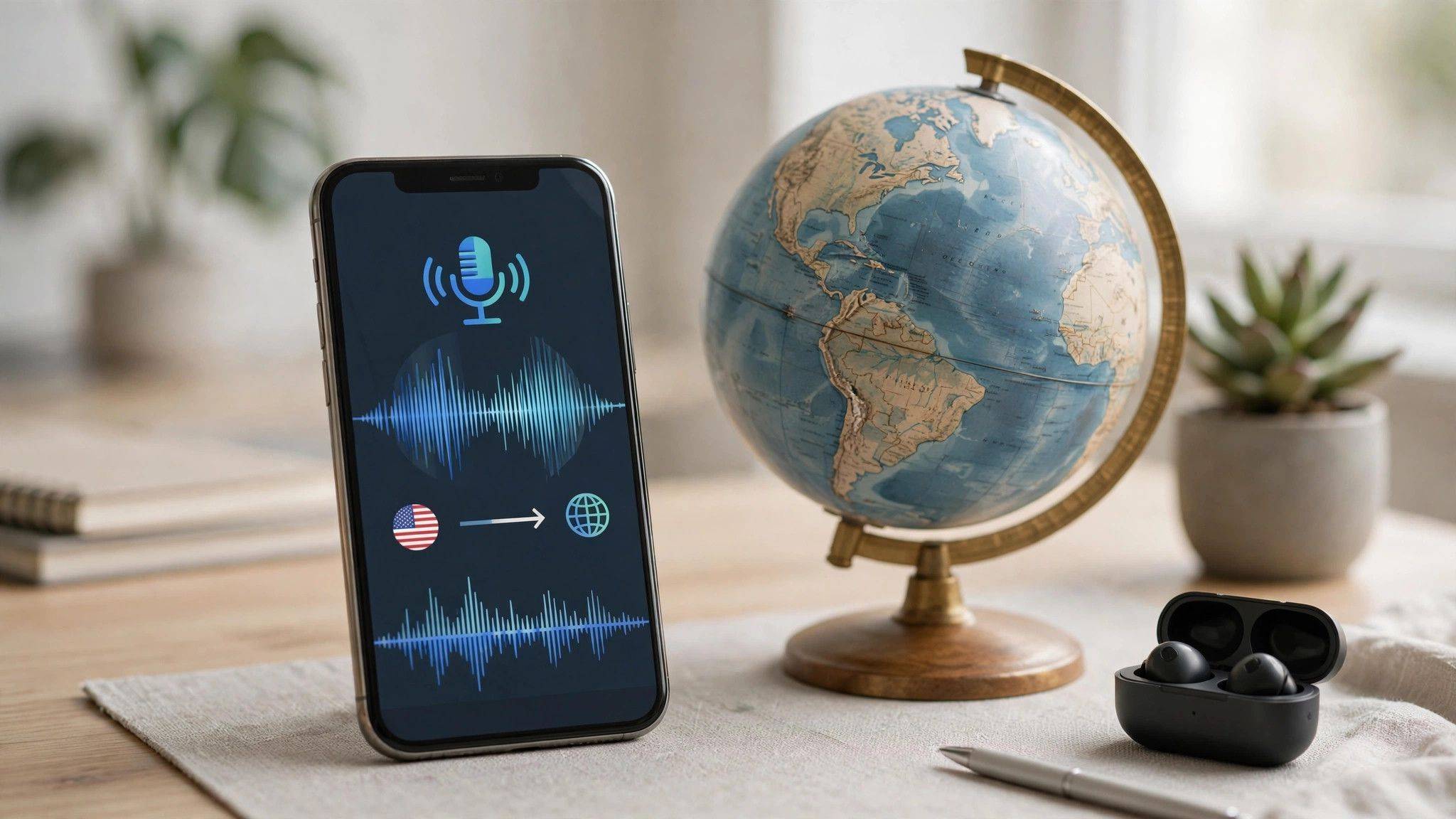
Language barriers are dissolving. In 2026, AI translation tools convert your speech into another language almost instantly — naturally enough for real conversations, business meetings, and travel emergencies. Machine translation went from "funny mistakes" to "genuinely useful" in just a few years. Here is how to use it well.
Real-Time Conversation Mode
The killer feature: two people speaking different languages, each hearing the other in their own tongue through earbuds or a phone speaker. It works best with short, clear sentences — pause between thoughts and avoid slang. In 2026, latency is down to a second or two, making it practical for ordering food, asking directions, negotiating in markets, and even first business meetings.
Camera and Document Translation
Point your camera at a menu, sign, or contract and watch the translation appear overlaid on the image — like subtitles for the real world. For documents, upload PDFs or photos and get translated versions that preserve formatting. Always have a human review anything legally or medically important; AI is fluent but not accountable.
Accuracy: What to Expect
For major languages (Spanish, French, German, Chinese, Japanese), AI translation in 2026 is excellent for everyday and business use — roughly 95%+ accurate on straightforward content. It still stumbles on humor, poetry, heavy slang, and low-resource languages. Treat it as a brilliant assistant: trust it for understanding, verify it for publishing.
Best Uses in 2026
Travelers: download offline language packs before your trip — they work without data or roaming. Remote workers: real-time captions make multilingual video calls dramatically smoother. Language learners: use translation as training wheels, then wean yourself off; the goal is understanding, not dependence. Customer support teams: instant multilingual chat is now table stakes.
Download one good translation app before your next trip, learn its conversation mode in five minutes, and walk into any country a little braver. The world got smaller in 2026 — you might as well explore it.