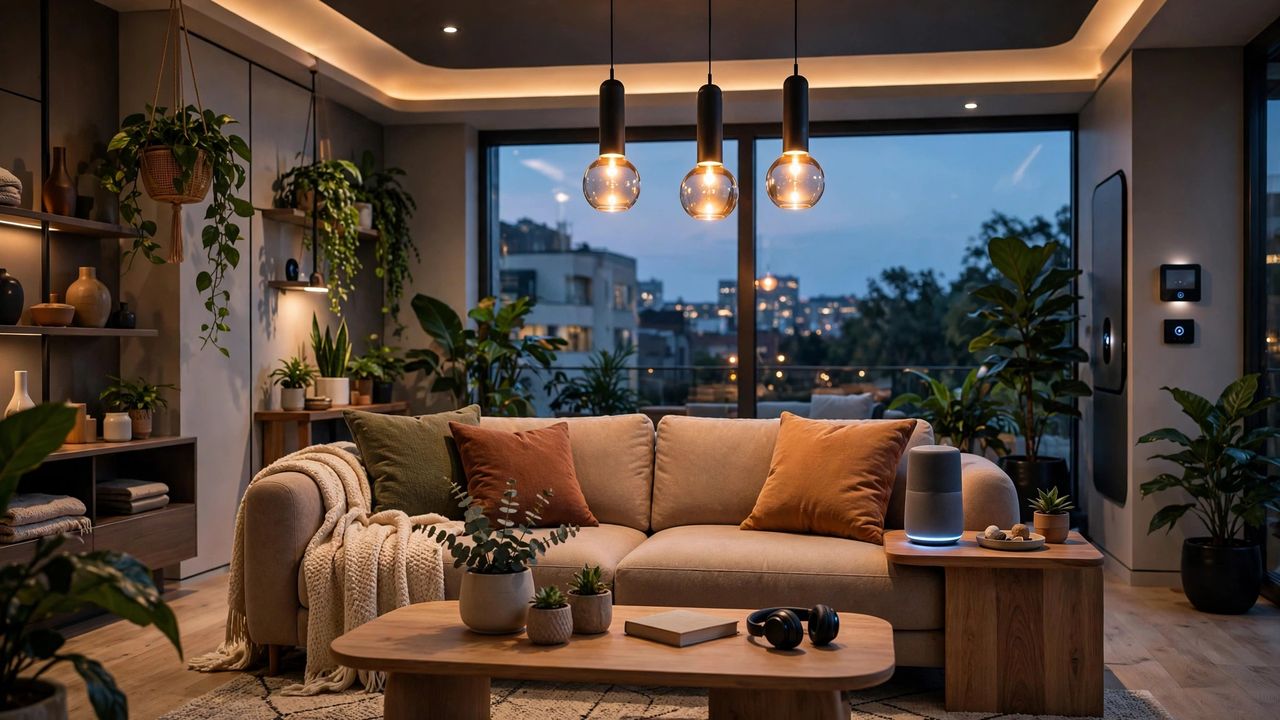
A smart home sounds expensive — but in 2026 you can automate lights, heating, and security for the price of a nice dinner out. AI-powered assistants and cheap smart devices make it easy: no rewiring, no technician, just plug in and talk. This guide shows exactly what to buy first, how to set up money-saving routines, and how to keep your data private while your house gets smarter.
Starter Devices: What to Buy First
Start small and useful. Smart plugs ($10–15) are the best first buy — they turn any lamp, fan, or coffee maker into a voice-controlled device instantly. Next, grab two or three smart bulbs: dimmable, color-changing, and schedulable from your phone. A single smart speaker ($30–50) becomes your home's voice brain, controlling everything hands-free. Stick to one ecosystem — Alexa, Google Home, or Apple HomeKit — because mixed ecosystems cause headaches. Look for the Matter logo on the box; it is the new universal standard that lets devices from different brands work together. Skip the fancy stuff at first: a $15 plug that turns your bedroom lamp on at sunset delivers more daily joy than a $300 gadget you barely use.
Routines and Voice Control: Morning, Evening, Energy Saving
Devices are just hardware — routines are the magic. Set a "Good morning" routine: lights fade on gently, the speaker reads your calendar and weather, and the coffee maker (on a smart plug) starts brewing. An evening routine dims lights to warm tones, locks compatible doors, and arms the security camera. The biggest win is energy saving: schedules that turn off forgotten lights, smart thermostats that lower heating when nobody is home, and plugs that cut standby power can shave 10–20% off your electricity bill. Use voice commands for the small stuff — "turn off the kitchen" while cooking — and let automations handle the boring repeats. Start with two or three routines; add more only when the first ones feel natural.
Security and Privacy: Strong Passwords, Smarter Habits
Every smart device is a tiny computer on your network — treat it like one. Change default passwords immediately and use a unique strong password for your smart-home account. Put smart gadgets on a separate guest Wi-Fi network so a hacked bulb cannot reach your laptop or bank app. Know what your devices collect: voice assistants record commands, cameras see your home — read the privacy settings and turn off ad personalization and unnecessary data sharing. Buy from established brands with a track record of security updates; no-name cameras at half price are a privacy gamble. Keep firmware updated — most updates patch real vulnerabilities. And remember the golden rule: no camera in the bedroom, no matter how good the deal is.
You do not need a fortune to live in a smart home — $100 of starter devices plus free routines covers the essentials. Buy one ecosystem, automate the boring stuff, lock down your network, and enjoy a house that works around you instead of the other way around.