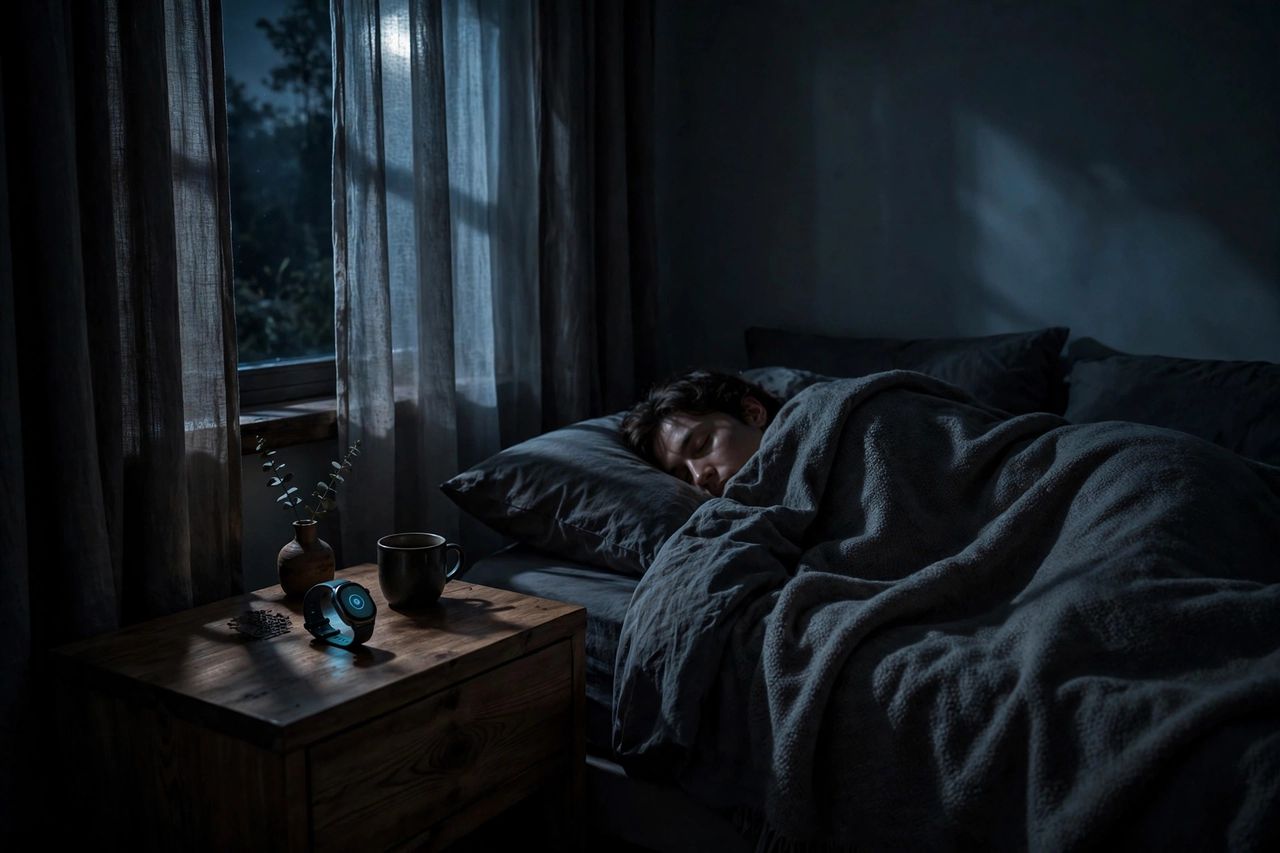
You bought a smartwatch, it tells you that you slept badly — and then what? In 2026, AI sleep coaches close that gap. They don't just track your sleep; they study your patterns, explain what's hurting your rest, and give you small, personalized actions every day. Think of it as a coach living on your wrist: part scientist, part gentle nag.
What AI Sleep Tracking Actually Measures
Modern sleep tracking goes far beyond "7 hours in bed." Your watch or ring estimates sleep stages — light, deep, and REM — using movement and heart-rate data, and shows how much truly restorative sleep you got. It logs schedule consistency: going to bed at wildly different times confuses your body clock more than most people realize. Many apps detect snoring and restlessness through your phone's microphone, flagging possible breathing issues worth discussing with a doctor. Some add daytime inputs — caffeine timing, exercise, screen use — so the AI can connect your habits to your sleep quality.
How AI Coaching Improves Your Habits
Data without coaching changes nothing, so the AI turns your numbers into advice. If your deep sleep drops on late-caffeine days, you get a friendly caffeine cutoff reminder at 2 PM. If you scroll in bed until 1 AM, the coach suggests a wind-down routine: dim the lights, put the phone down, read something calm. The coaching adapts weekly — when you improve, the nudges get subtler; when you slip, they get firmer. The best part? It celebrates progress: seeing your sleep score climb over a month is surprisingly motivating.
Practical Sleep Tips That Actually Work
AI coaching works best on top of proven basics. Keep a consistent wake time, even on weekends — it anchors your whole sleep cycle. Get morning daylight within an hour of waking; it resets your internal clock better than any supplement. Stop caffeine 8 hours before bed and heavy meals 3 hours before. Keep your bedroom cool, dark, and quiet — around 18°C is ideal for most people. If you lie awake for 20 minutes, get up and do something boring instead of scrolling. And treat the AI's advice as a guide, not a grade: one bad night is normal, patterns are what matter.
AI sleep coaches won't knock you out like a pill — they do something better: they teach you what your own body needs. Wear the tracker, follow the nudges for a few weeks, and you'll likely find mornings getting easier. Your best sleep is a habit, and now you have a coach that never sleeps on the job.