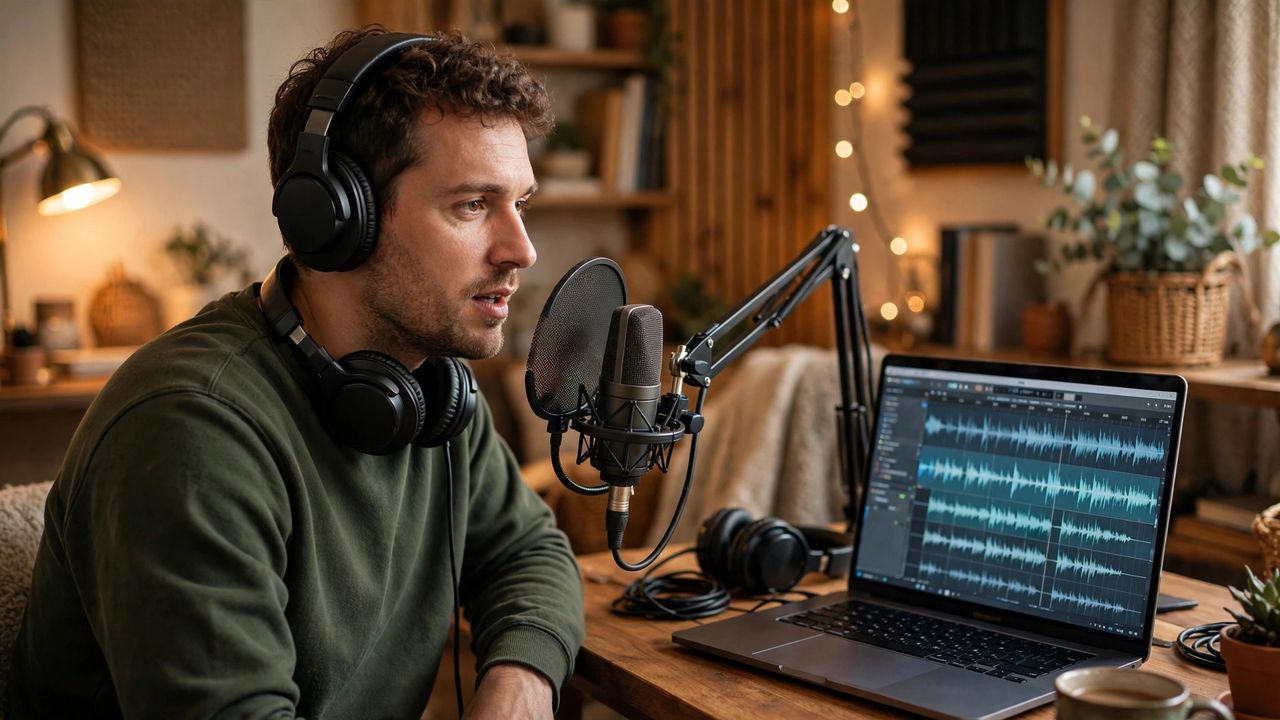
Editing used to be the most painful part of podcasting — hours of scrubbing waveforms to cut "umms," long pauses, and background hum. In 2026, AI podcast editing tools do the heavy lifting: they transcribe your episode, remove filler words with one click, balance voices, and even write your show notes. Here is how to get professional-sounding episodes without spending your evenings in an editor.
Delete filler words automatically
Modern AI editors scan your transcript for "um," "uh," "you know," and awkward silences, then remove them from the audio with a single click. You can also delete words directly from the transcript — the audio follows. Review the transcript first and protect any intentional pauses for dramatic effect. Always listen through once after bulk-deleting fillers. AI occasionally clips a word boundary too aggressively, and a quick review pass catches the rare glitch before your listeners do.
Balance levels and clean the sound
One-click enhancement tools level out volume differences between hosts, reduce background noise, and remove echo — turning a bedroom recording into something close to studio quality. Record each speaker on a separate track when possible so the AI can process voices individually. Record in the quietest room you have, even with AI cleanup. Enhancement tools work miracles, but they cannot fully rescue audio recorded next to a washing machine.
Generate show notes and chapters
After editing, AI tools can write your episode description, generate chapter markers with timestamps, and pull out quotable highlights for social media. This turns one recording into a full content package. Edit your show notes for your voice before publishing. AI summaries are accurate but generic — adding one personal line about your favorite moment makes the description feel human and boosts click-throughs.
Repurpose every episode
The smartest podcasters in 2026 squeeze maximum value from each episode: AI clips the best 60-second moments as vertical videos, transcribes the full episode for SEO blog posts, and drafts newsletter summaries. Set up this pipeline once and it runs automatically. Create at least three short clips from every episode. Short-form video is the fastest-growing discovery channel for podcasts, and one viral clip can add more listeners than months of organic growth.
AI podcast editing in 2026 means the technical barrier is gone — what matters now is your ideas and your consistency. Record clean audio, let the AI handle the tedious cuts, polish the show notes, and repurpose everything. You can now publish a professional episode in an afternoon instead of a weekend.