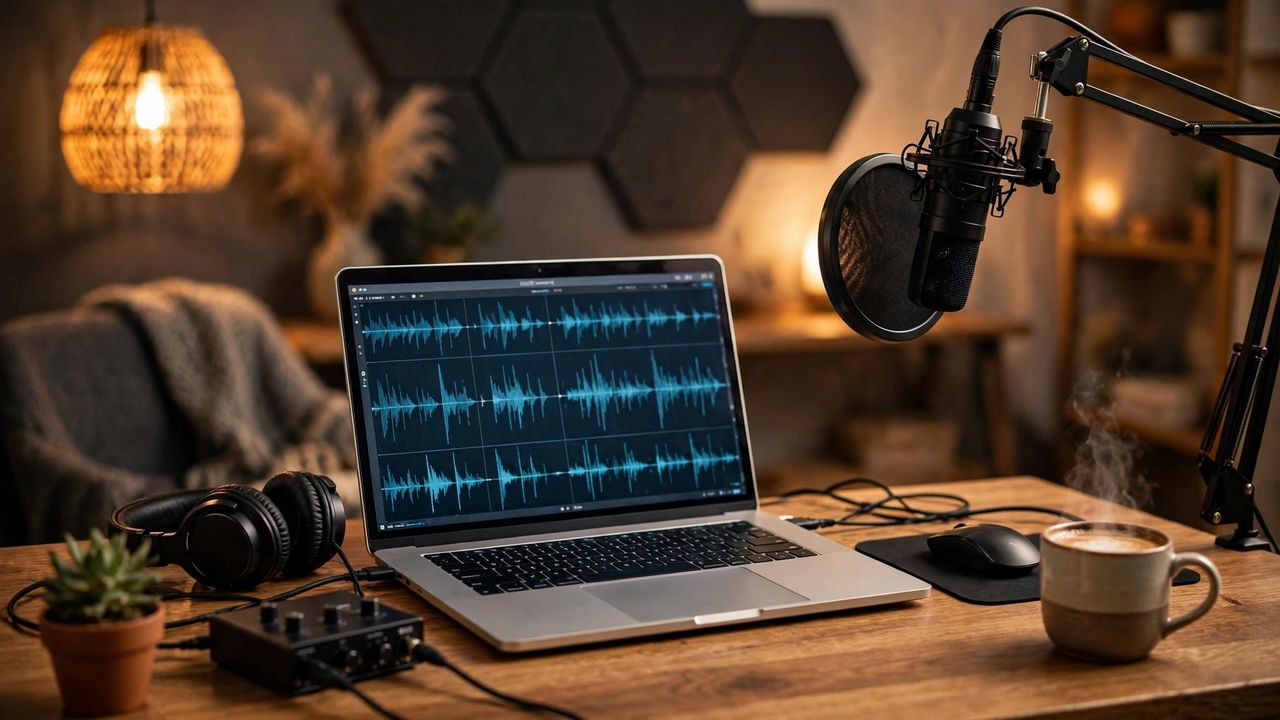
Starting a podcast in 2026 is easier than ever, because AI can now handle the parts that used to take hours — planning, editing, and promotion. You no longer need a studio or a professional editor. With a decent microphone and a few smart tools, one person can produce a show that sounds polished and professional, even if you have never touched audio software before.
Plan Your Episodes with AI
Every good episode starts with a clear plan. Use an AI chat tool to brainstorm episode topics, build an outline, and draft talking points in your own voice. Ask the AI to turn one idea into a full outline with an intro, three key points, and a closing call to action. Then rewrite it in your words so the show sounds like you, not like a machine reading a script.
Record and Clean Up Your Voice
Record in a quiet room with a USB microphone — that alone covers most of the quality battle. After recording, AI audio tools can remove background noise, balance volume, and delete filler words like "um" and "uh" automatically. Always listen to the result on both speakers and earphones before publishing, because heavy cleanup can sometimes make voices sound slightly robotic.
Generate Show Notes and Audiograms
AI can transcribe your episode, then turn the transcript into show notes, episode summaries, and social-media posts in seconds. From the same transcript you can pull short quotes and make audiograms — short captioned clips that work well on TikTok and Instagram. This turns one recording into a week of promotional content with almost no extra effort.
A Practical Starter Workflow
Here is a simple weekly routine: Monday, generate the outline with AI. Wednesday, record for 30 minutes. Thursday, run the cleanup tools and generate the transcript. Friday, publish the episode along with show notes and two audiograms. Keep episodes under 30 minutes at first — consistency matters more than episode length when you are building an audience.
The takeaway: AI removes the boring, technical parts of podcasting so you can focus on what actually matters — your ideas and your voice. Start with one episode this week, publish it, and improve episode by episode.