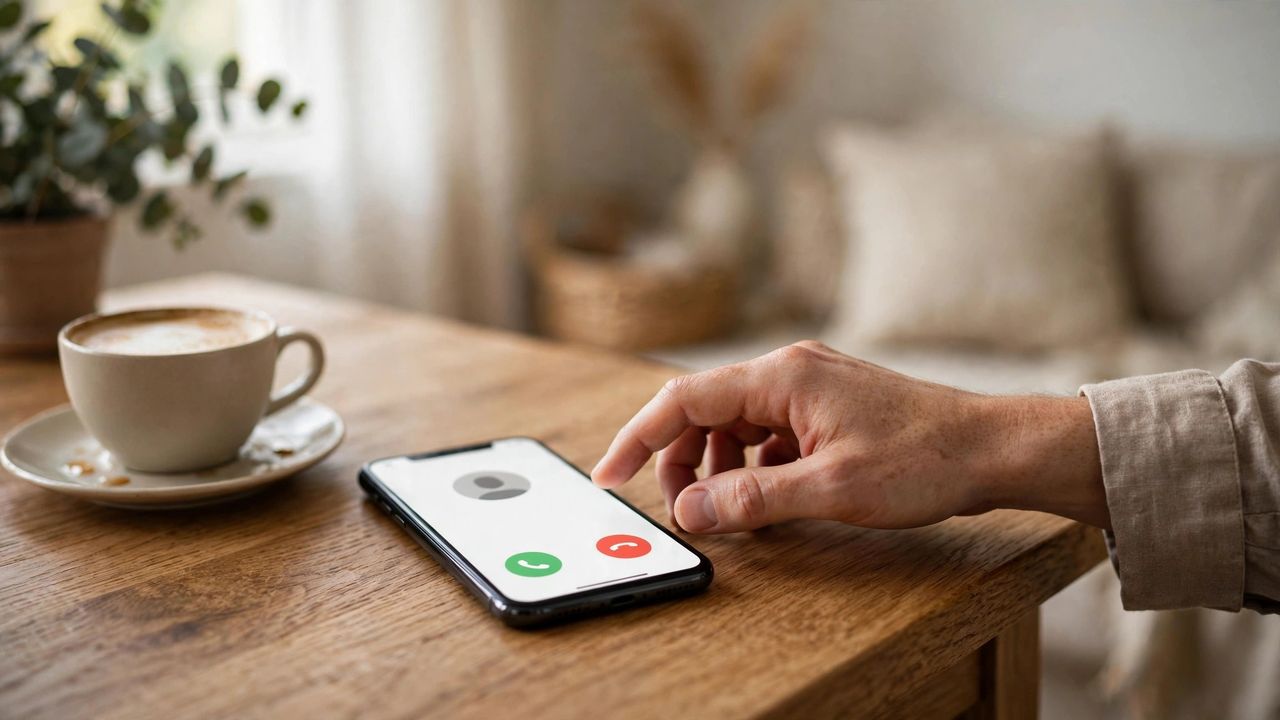
Your phone rings during dinner — an unknown number. Do you answer and risk a 10-minute sales pitch, or ignore it and miss something important? In 2026, AI phone call assistants end that dilemma. They answer unknown numbers for you, ask the caller who they are and why they are calling, and show you a live transcript so you can decide in real time whether to pick up, take a message, or hang up.
How AI Call Screening Works
When an unknown caller rings, the assistant answers in a natural-sounding voice and introduces itself as your AI screener. It asks the caller's name, organization, and reason for calling. You watch the conversation appear as a live transcript on your screen. At any moment you can tap a button to take over the call yourself, ask the assistant to take a message, or mark the caller as spam and block them. The caller hears a polite, professional voice — not a robot maze. Setup takes minutes: you choose which numbers get screened (unknown numbers, for example) and let contacts ring straight through.
Spam and Scam Call Blocking
This is where AI assistants truly shine. The system checks each number against updated spam databases and listens for the telltale signs of robocalls and scams — strange pauses, recorded voices, pressure scripts. Suspicious calls get silently blocked or interrogated by the AI before your phone even vibrates. With scammers now using voice cloning to impersonate family members, some assistants add a verification step: they ask the caller a question only the real person could answer, and alert you if something looks wrong. It is not perfect, but it filters out the overwhelming majority of junk calls.
Scheduling, Reminders, and Smart Messages
Screening is only the beginning. Modern AI call assistants also book appointments for you — confirming a dentist visit, rescheduling a delivery, or answering a restaurant's confirmation call. They can send the caller a smart text reply: "He's in a meeting, he'll call you back at 5 PM." Businesses use them to answer every customer call, take orders, and log inquiries around the clock. Some assistants even remind you to return important calls you missed, turning your call log into a tiny to-do list.
Privacy Considerations
Handing your calls to an AI means trusting a company with your conversations. Prefer providers that do on-device processing or publish clear data-retention policies — know how long transcripts are stored and who can see them. Check your local recording laws: in some places, recording a call without consent is illegal, so announcements matter. Review and delete old transcripts periodically, and turn off screening for sensitive calls like banks or doctors. The convenience is real, but your privacy settings should be deliberate, not default.
AI phone call assistants have quietly become one of the most useful AI tools of 2026. They give you back your attention, protect you from scams, and handle the small phone errands nobody enjoys. Turn on screening for unknown numbers, set your preferences once, and let your AI guard your phone while you get on with your day.