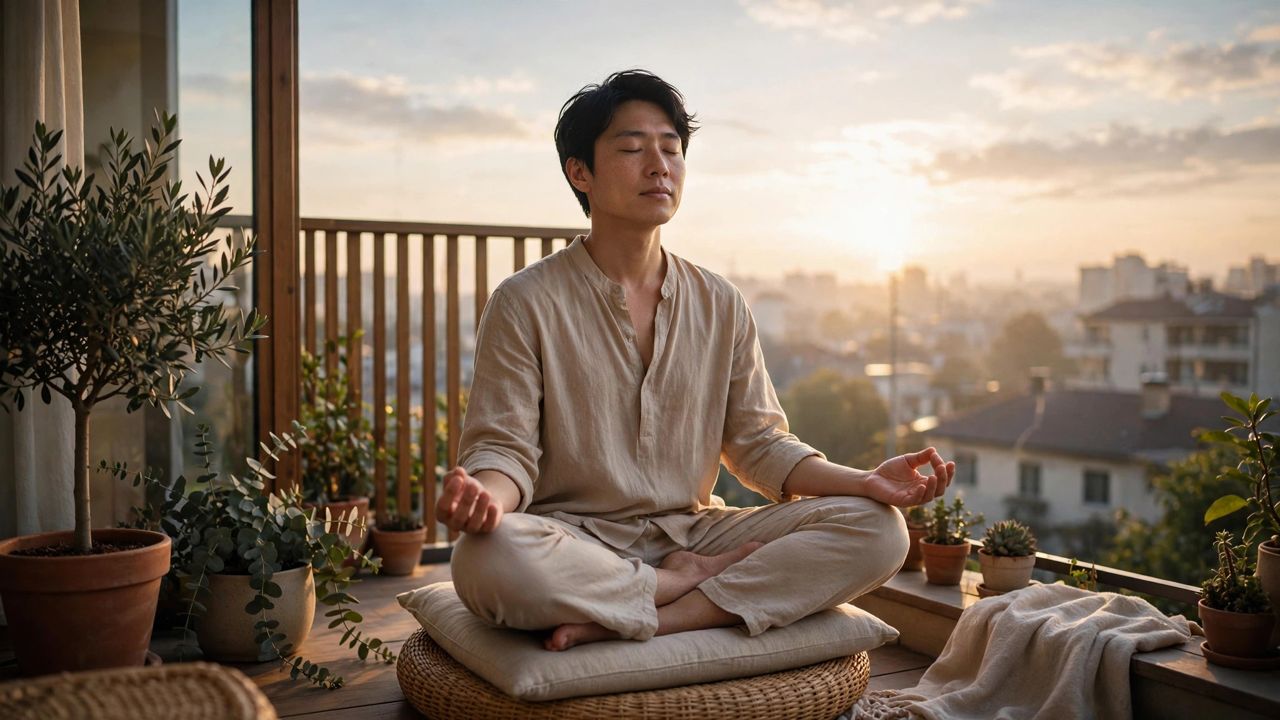
Your mind races at 2 a.m. replaying conversations. Your shoulders live near your ears. Sound familiar? In 2026, AI meditation guides make starting a meditation practice easier than ever: sessions tailored to your stress level, your schedule, and even your mood — no incense or monastery required. Just ten quiet minutes a day can measurably lower anxiety and improve sleep.
Personalized Sessions That Meet You Where You Are
Generic meditation apps play the same recording for everyone. AI guides are different: tell it "I'm anxious about tomorrow's presentation" and it builds a custom session — grounding breathing first, then reframing thoughts about the presentation, then a confidence visualization. Bad day? Ask for a 5-minute reset between meetings. Can't sleep? Get a slow body-scan that guides you down into rest. The AI learns what works for you: if breath counting calms you faster than mantras, it leans into breathing. It also adapts length to your life — a real 10-minute session beats an ambitious 30-minute one you skip. Meditation that fits your day is meditation you'll actually do.
Breathing Techniques That Work in Minutes
You don't need to meditate to benefit from the core skill: controlled breathing directly calms your nervous system. Try box breathing: inhale 4 counts, hold 4, exhale 4, hold 4 — used by soldiers and surgeons to steady nerves in minutes. For panic moments, physiological sighs work fastest: two short inhales through the nose, then one long slow exhale; repeat three times and feel your heart rate drop. For sleep, the 4-7-8 technique (inhale 4, hold 7, exhale 8) tells your body it's safe to power down. Ask your AI guide to walk you through any of these with timed voice cues — following along is far easier than counting alone.
Building a Practice That Sticks
Start embarrassingly small: 3 minutes a day for the first two weeks. Attach it to an existing habit — right after morning coffee, or in bed before sleep — so you don't rely on willpower. Expect a noisy mind; meditation isn't emptying your head, it's noticing thoughts and gently returning to the breath. That returning IS the exercise, like reps for your attention muscle. Track your streak but don't worship it — missing a day isn't failure, quitting is. And measure what matters: after a month, ask yourself not "am I enlightened?" but "do I snap less? sleep better? recover from stress faster?" Those quiet changes are the whole point.
An AI meditation guide won't eliminate stress from your life — nothing will. But it gives you a reliable off-switch: ten minutes where the noise stops and you remember you're more than your to-do list. Start tonight with a 5-minute sleep session. Your 2 a.m. self will thank you.