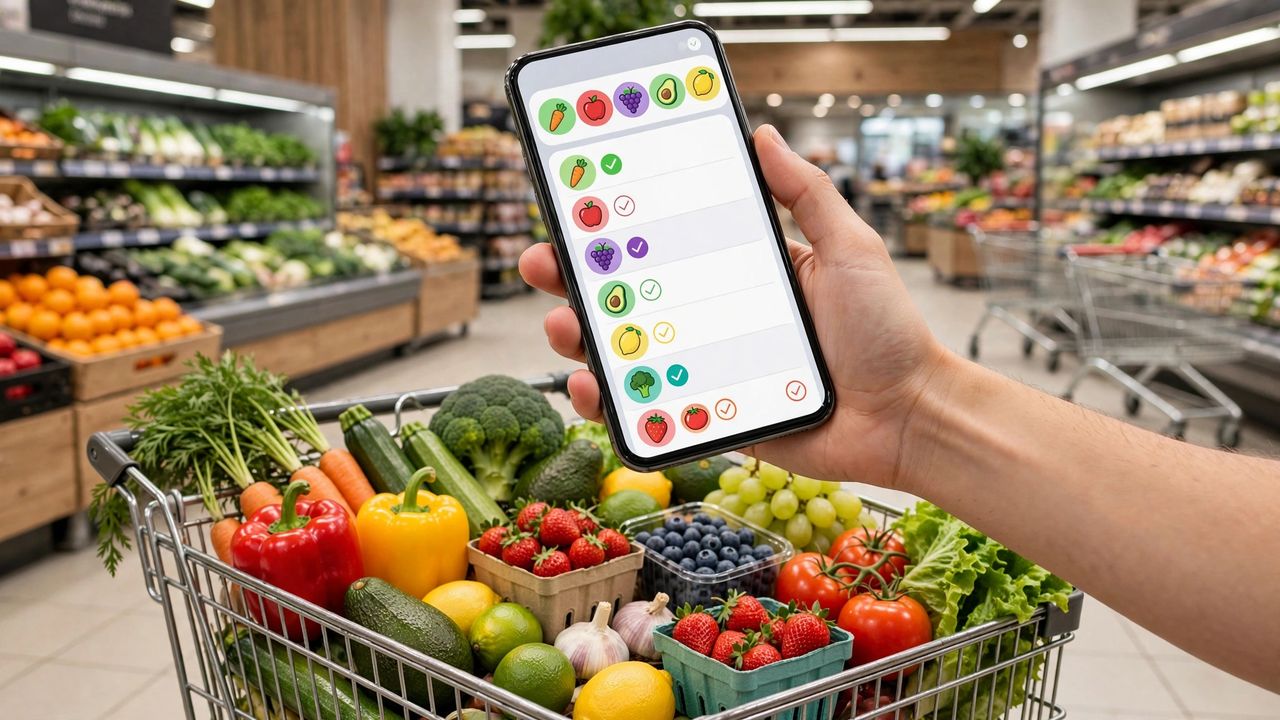
You drive home from the store, unpack the bags, and there it is: no milk. Again. Meanwhile the spinach from last week is melting in the drawer. AI grocery list makers are built for exactly this chaos — they remember what you forget, plan meals around what you already own, and quietly shave money off your weekly bill. Here is how they work and how to get the most out of one.
How AI grocery apps actually work
Modern grocery apps do far more than hold a list. They learn your staples from past shops, suggest recipes based on what is in your pantry, and auto-generate lists from your weekly meal plan. The real magic is memory: the app remembers your household's habits so you stop relying on yours. Snap a photo of your fridge or import a past receipt, and the app builds your shopping profile in minutes.
Meal planning that fits real life
Forget rigid 21-day meal plans nobody follows. Tell the app how many people you are feeding, any dietary needs, and how many nights you actually cook — and it suggests flexible meals with shared ingredients. Pick recipes that reuse ingredients across the week, and one chicken becomes three dinners instead of one. Swap any meal you dislike and the list updates instantly, so the plan bends instead of breaking.
Price tracking and waste cutting
The best 2026 apps track prices across your local stores and flag when a staple costs more than usual. Some even scan weekly flyers to suggest where each item is cheapest. Buy what you will actually eat this week — a deal on produce that rots in the fridge is not a deal. Set expiry reminders for fresh items and the app nudges you to cook them first.
Getting started without the overwhelm
Start simple: pick one app, enter your three most-cooked dinners, and let it generate your first list. Do not digitize everything on day one. Share the list with your household so anyone can add items the moment they run out — that is where forgotten-milk syndrome dies. After two weeks, check the spending report; most people find savings of ten percent or more they never noticed.
An AI grocery list will not cook dinner for you, but it removes the friction around it. Less waste, fewer emergency trips, and a bill that shrinks instead of grows — that is a 2026 upgrade worth making.