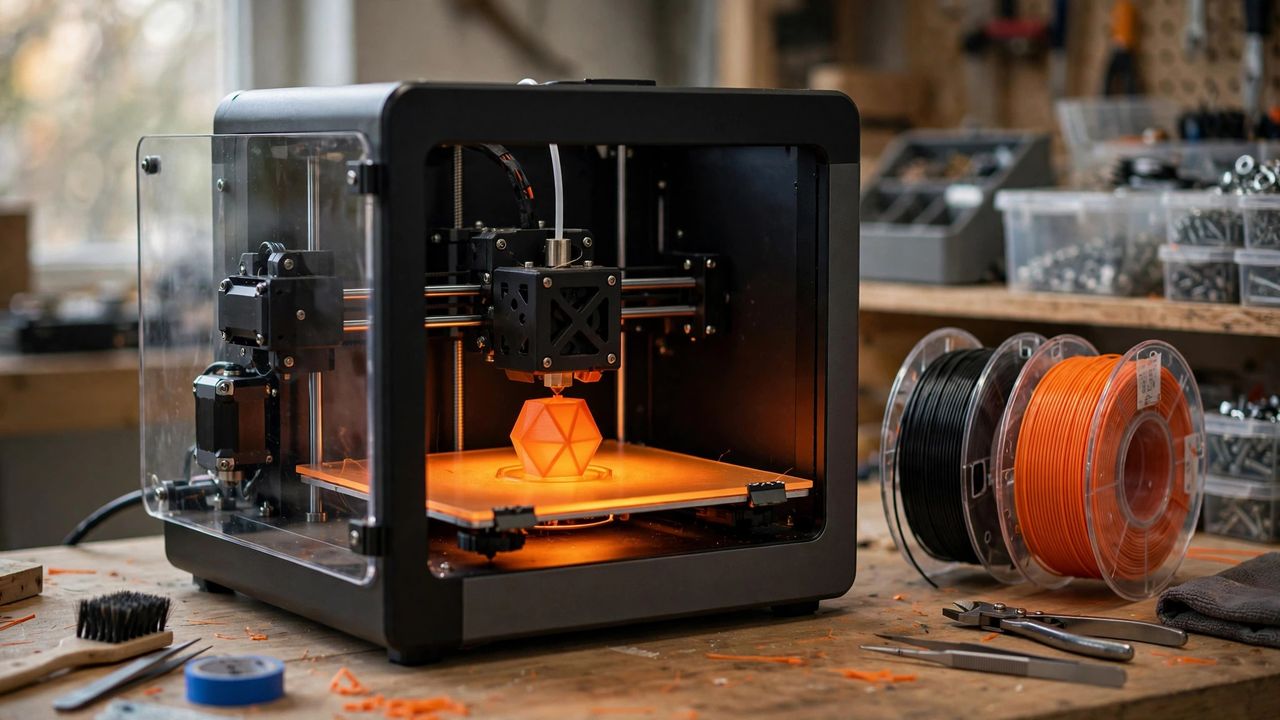
3D printing went from industrial curiosity to a $200 desktop hobby that makes real, useful objects. If you've been curious, 2026 is the perfect year to start: printers are cheaper, easier, and more reliable than ever. Here's everything you need for your first successful print.
Choosing Your First Printer
For beginners, an FDM printer (melts plastic filament) is the way to go — affordable, safe, and versatile. Look for auto bed-leveling, a direct-drive extruder, and a strong community (popular models have thousands of YouTube tutorials). Budget $200–$350 for a solid starter; skip ultra-cheap kits unless you enjoy troubleshooting as a hobby.
Filament: Start With PLA
PLA plastic is the beginner's best friend: easy to print, low odor, and biodegradable. Stick to 1.75mm PLA from a reputable brand — cheap filament jams and ruins prints. Store it dry; PLA absorbs moisture from the air, which causes stringy, ugly prints. A sealed box with silica gel packets works fine.
From File to Print: Slicer Basics
Download free designs from sites like Printables or Thingiverse — don't design anything yet. A "slicer" (free software, usually bundled with your printer) converts the model into printer instructions. Start with the default profile, 0.2mm layer height, and 15–20% infill. Your first print should be small: a calibration cube or a simple hook, not a helmet.
Troubleshooting Your First Prints
Print not sticking to the bed? Clean the bed with isopropyl alcohol and check the nozzle height — the first layer should look slightly squished. Stringy mess? Your filament is probably damp. Layer shifting? Tighten the belts. Ninety percent of beginner problems are bed adhesion, wet filament, or loose belts — all fixable in minutes.
Your first print will feel like magic — an idea becoming an object on your desk. Start simple, expect a few failures, and join an online community. Within a month you'll be printing things you can't buy in any store.